Notarization confirms the signer's identity and willingness but does not automatically make a document legally binding. The content and execution of the document determine enforceability.
A notarized document carries significant legal weight, but notarization alone does not make every document legally binding. Understanding what notarization actually proves is essential for anyone signing important papers in Utah.
Key Takeaways
- Notarization verifies the signer's identity and willingness, not the document's legal content
- A document can be legally binding without notarization if properly executed
- Certain documents in Utah require notarization by statute
- Notarization adds an evidentiary layer that makes documents harder to dispute
- A notary cannot validate whether the terms of a contract are fair or enforceable
Need a document notarized in Park City?
NotaryLTD provides mobile and RON notary services seven days a week. Commission #742886, 30+ years experience.
Book NowWhat Notarization Actually Proves
Notarization is an official verification process performed by a state-commissioned notary public. When a notary notarizes a document, they are certifying three specific things: the signer is who they claim to be, the signer appeared voluntarily and was not coerced, and the signer acknowledged understanding the document they are signing. The notary accomplishes this by checking the signer's government-issued photo identification, observing the signer's demeanor for signs of duress or confusion, and watching the signer apply their signature in the notary's presence.

What notarization does not do is verify the accuracy, truthfulness, or legality of the document's contents. A notary is not an attorney and is prohibited under Utah law from reviewing documents for legal sufficiency. If you bring a contract with unfavorable terms to a notary, the notary will notarize your signature without any obligation to warn you about those terms. The notary's role begins and ends with identity verification and witnessing the signing act.
This distinction matters because many people assume that a notarized document is automatically enforceable in court. In reality, the enforceability of a document depends on its content, the legal capacity of the parties, consideration exchanged, and compliance with any statutory requirements that apply to that type of document. Notarization adds a strong presumption of authenticity, which courts respect, but it cannot salvage a document that is otherwise defective.
When Notarization Is Legally Required in Utah
Utah law requires notarization for specific categories of documents. Real property deeds must be notarized before they can be recorded with the county recorder's office. A deed that lacks proper notarization will be rejected at the recording window, which can delay real estate closings and create title issues down the line. This applies to warranty deeds, quitclaim deeds, trust deeds, and reconveyance documents.
Powers of attorney in Utah must also be notarized to be effective. Whether you are granting someone financial power of attorney, healthcare decision-making authority, or a limited power for a specific transaction, the document requires notarization. Without it, banks, medical providers, and other institutions will refuse to honor the power of attorney, which defeats its purpose entirely.
Affidavits and sworn statements require notarization because the notary administers an oath or affirmation to the signer. The signer swears under penalty of perjury that the statements in the document are true. This is a jurat notarization, which is different from an acknowledgment. The oath component gives the statements legal force because making a false sworn statement is a criminal offense in Utah.
Advanced healthcare directives, certain business formation documents filed with the Utah Division of Corporations, and some court filings also require notarization. For estate planning documents in particular, proper notarization can prevent costly disputes among family members after a loved one passes away. If you are unsure whether your document requires notarization, consult with an attorney or contact our team at 435-565-1333 for general guidance on notary requirements.
Documents That Are Binding Without Notarization
Many common documents are perfectly binding without any notarization at all. Standard business contracts, employment agreements, service contracts, and purchase orders are enforceable based on the mutual agreement of the parties and the exchange of consideration. A simple signature from both parties is all that is required for these documents to be binding.
Wills in Utah are an interesting case. A will does not need to be notarized to be valid under Utah law. It must be signed by the testator and witnessed by two competent witnesses. However, adding a self-proving affidavit, which is a notarized statement from the witnesses, streamlines the probate process significantly. Without the self-proving affidavit, the court may need to locate the witnesses and take their testimony before admitting the will to probate.
Lease agreements, promissory notes, personal loan agreements, and independent contractor agreements are all binding without notarization. However, adding notarization to any of these documents provides an extra layer of protection. If a dispute arises and one party claims they never signed the document, the notarization serves as strong evidence that the signature is authentic and was applied voluntarily.
Medical consent forms, school permission slips, and routine business authorizations are other examples of documents that do not require notarization. The common thread is that these documents rely on the parties' mutual consent and compliance with basic contract law principles rather than on a notary's verification.
Unsure if your document needs notarization?
Contact NotaryLTD for guidance. We handle every type of notarization at $10 per act for in-person or $25 per act for RON.
Book NowHow Notarization Strengthens a Document's Legal Standing
Even when notarization is not required by law, it dramatically strengthens a document's standing in court. Courts apply a legal presumption of validity to notarized documents. This means that if one party challenges the authenticity of a notarized document, the burden of proof shifts to the challenger. They must provide clear and convincing evidence that the notarization was defective, which is a high standard to meet.
This evidentiary benefit makes notarization particularly valuable for high-stakes documents such as large contracts, settlement agreements, property transfers, and financial arrangements. In litigation, a notarized document is much harder to dispute than an unnotarized one. The notary's journal entry, which records the date, time, type of ID presented, and the signer's appearance, provides independent corroboration of the signing event.
For loan signing transactions, notarization is standard practice because lenders require the certainty that the borrower's signature is genuine. Title companies and closing attorneys insist on notarization for the same reason. The chain of title in real estate depends on authentic, properly executed documents, and notarization is the primary mechanism for ensuring authenticity.
In the context of remote online notarization, the evidentiary record is even stronger. RON sessions are recorded in their entirety, including audio and video of the signer, the identity verification process, and the signing act. This recording is retained for a minimum of five years under Utah law, providing a comprehensive record that is extremely difficult to challenge in court.
Common Misconceptions About Notarized Documents
The most widespread misconception is that notarization makes any piece of paper a legally binding contract. This is false. A notarized napkin with the words "I owe you a million dollars" is not an enforceable contract simply because a notary stamped it. Contract formation requires offer, acceptance, consideration, legal capacity, and lawful purpose. Notarization is not a substitute for any of these elements.
Another common misconception is that a notary reviews the document for errors or legal problems. As noted earlier, a notary cannot and should not give legal advice. If you need a document reviewed for legal sufficiency, you need an attorney, not a notary. For questions about what constitutes legal advice versus notary services, see our guide on whether a notary can give legal advice in Utah.
Some people believe that notarization makes a document permanent or irrevocable. This is also incorrect. Notarized contracts can be modified or rescinded by mutual agreement of the parties, just like any other contract. Notarized powers of attorney can be revoked by the principal at any time. Notarization locks in the identity verification and signing event, but it does not prevent the parties from changing the terms of their agreement through proper legal channels.
A final misconception is that notarization is the same everywhere. Notary laws vary significantly from state to state. Utah's requirements for identification, journal keeping, and notarial acts differ from those in California, New York, or Texas. A document notarized under Utah law may face scrutiny if presented in a state with different requirements, though most states honor out-of-state notarizations under the principle of comity. For cross-border notarization questions, see our post about whether a Utah notary can notarize a California document.
Protecting Your Notarized Documents
Once a document is properly notarized, take steps to preserve it. Store the original in a fireproof safe, safety deposit box, or other secure location. Make copies and keep them in a separate location. For real estate documents, ensure that the originals are recorded with the appropriate county recorder's office in a timely manner.
For documents notarized through RON, the digital originals are inherently more durable than paper. They are sealed with tamper-evident technology and stored electronically. However, you should still download and save copies to your own secure storage. The RON platform retains recordings and session data, but having your own backup ensures you have access regardless of the platform's future availability.
If a notarized document is lost or destroyed, obtaining a replacement can be complicated. For recorded real estate documents, you can request a certified copy from the county recorder. For other documents, you may need to have the parties re-execute and re-notarize the document. This underscores the importance of proper document storage from the start.
At NotaryLTD, we maintain detailed journal records of every notarization we perform, including date, document type, signer information, and identification details. These records can help verify that a notarization occurred even if the original document is lost. Our journal records are maintained in compliance with Utah law and the requirements of SB 139 effective in 2026.
How Utah Courts Treat Notarized Documents
Utah courts give significant weight to notarized documents. Under the Utah Rules of Evidence, a notarized document is considered self-authenticating, meaning the party offering it into evidence does not need to call additional witnesses to prove the document is genuine. This is codified in Rule 902, which lists documents with notarial certificates as self-authenticating evidence.
In practice, this means that presenting a notarized document in a Utah courtroom is straightforward. The document speaks for itself regarding the identity of the signers and the voluntariness of their signatures. The opposing party can still challenge the document, but they bear the burden of proving that something was wrong with the notarization process.
For frequently asked questions about notarized documents and their legal effect, our FAQ page addresses the most common concerns. If you need specific legal advice about a particular document's enforceability, consult with a Utah attorney. NotaryLTD can handle the notarization side of any transaction, but we always recommend legal counsel for questions about the substance of your documents.
Ready to get your documents notarized?
NotaryLTD offers mobile and RON notary services across Park City, Summit County, and the Wasatch Front. $10 per act in person, $25 per act for RON. Call 435-565-1333 or book online.
Book NowFrequently Asked Questions
About the Author
Deborah Cuha
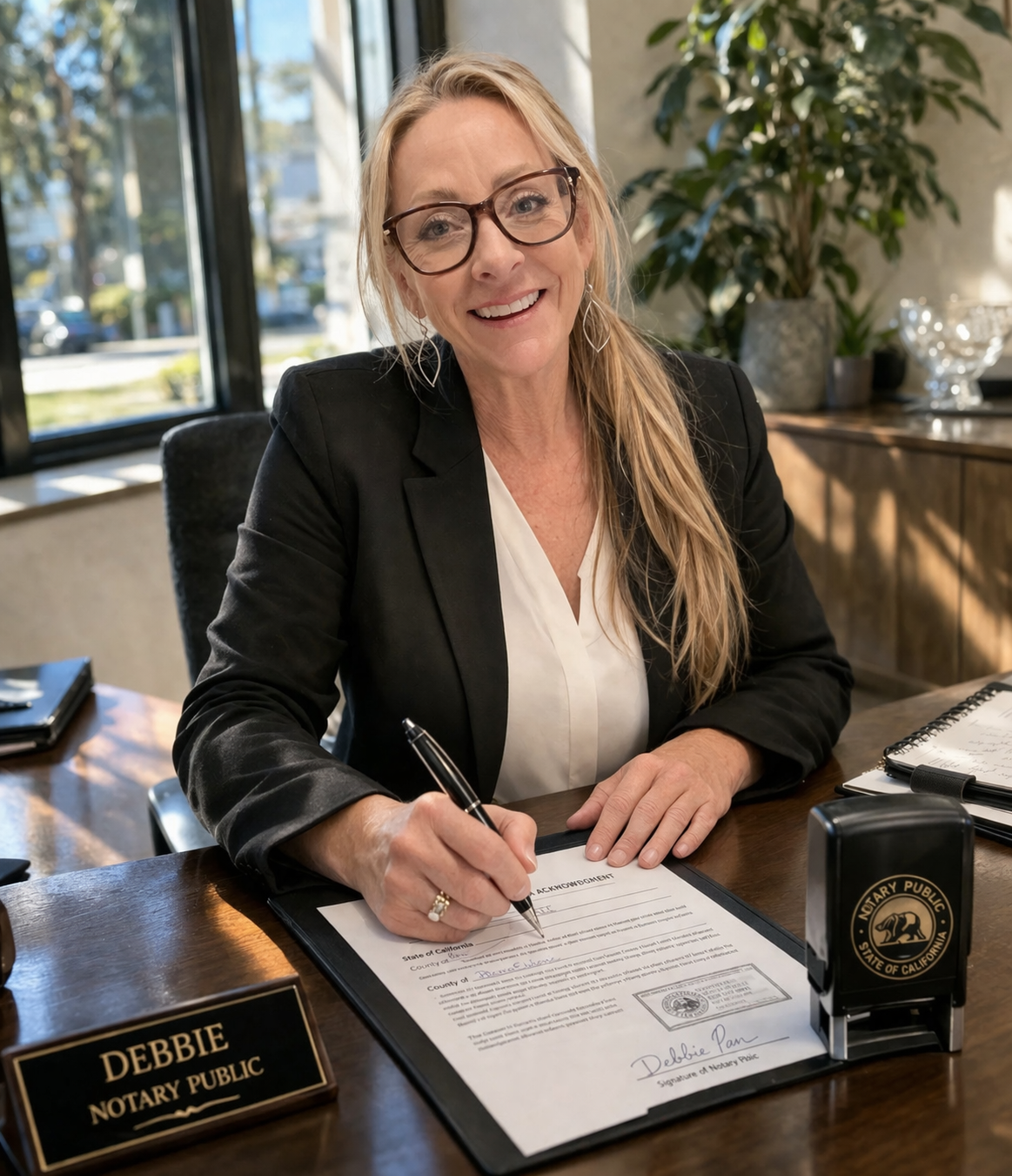
Licensed Utah Notary Public (Commission #742886) with 30+ years of experience. NNA Certified Loan Signing Agent and Certified Remote Signing Agent. Based in Park City, serving Summit, Wasatch, and Salt Lake counties.
Read Full Bio →