No. Utah law prohibits notaries from giving legal advice, selecting documents, or guiding signers on legal decisions. Only licensed attorneys may provide legal counsel.
Utah notaries are strictly prohibited from giving legal advice, choosing documents for clients, or explaining the legal consequences of signing. This restriction protects the public and maintains clear boundaries between notarial services and the practice of law.
Key Takeaways
- Utah notaries cannot give legal advice under any circumstances
- Giving legal advice constitutes unauthorized practice of law, a criminal offense
- Notaries can explain the notarization process but not the document's legal meaning
- Only a licensed Utah attorney can provide legal counsel about your documents
- Notaries who advertise as "notario publico" face additional penalties under Utah law
Need professional notary services in Park City?
NotaryLTD handles notarizations, not legal advice. For document notarization, call 435-565-1333 or book online.
Book NowWhy Notaries Cannot Give Legal Advice
The prohibition exists because the practice of law is a regulated profession that requires a license issued by the Utah State Bar after years of legal education, passing the bar exam, and meeting ongoing ethical and educational requirements. A notary public commission is an entirely separate credential with different qualifications and a much narrower scope of authority.

Under Utah Code 46-1-18 and the broader framework governing the unauthorized practice of law, anyone who provides legal advice without a law license commits a violation that can result in civil and criminal penalties. This applies to notaries just as it applies to any other non-attorney. The fact that a person holds a notary commission does not grant them any legal advisory authority whatsoever.
The rationale behind this restriction is consumer protection. Legal advice requires an understanding of statutes, case law, regulations, and how they apply to a specific person's situation. A notary, regardless of their experience, has not been trained or tested on these subjects. Allowing notaries to offer legal guidance would expose the public to potentially incorrect or harmful information about their legal rights and obligations.
This prohibition is absolute. It does not matter how simple the legal question seems or how many years a notary has been practicing. A notary with 30 years of experience, like the team at NotaryLTD, still cannot advise a signer about the legal implications of a power of attorney, the meaning of a clause in a contract, or whether a particular document is appropriate for their situation.
What a Utah Notary Can Legally Do
While the boundaries are strict, there are several things a notary is permitted to do during a notarization session. Understanding these permitted activities helps distinguish legitimate notary services from unauthorized legal practice.
A notary can explain the notarization process itself. This includes describing what type of notarial act will be performed, such as an acknowledgment, jurat, or copy certification. The notary can explain what the signer needs to do during the notarization: show their ID, sign in the notary's presence, take an oath if a jurat is required, and so on. This process-level explanation is squarely within the notary's role.
A notary can identify the type of notarial act a document requires by reading the notarial certificate language already printed on the document. If a document contains a pre-printed acknowledgment certificate, the notary can point that out and explain that an acknowledgment is being requested. If the document calls for a jurat, the notary can explain that an oath will be administered.
A notary can refuse to notarize a document if they have a reasonable belief that the signer is being coerced, is not competent, does not understand what they are signing, or if the notary suspects fraud. This refusal is not legal advice. It is a professional obligation that protects both the signer and the notary. For information on what happens when issues arise during notarization, see our post on what happens if a notary makes a mistake.
A notary can direct signers to general resources. For example, a notary can suggest that the signer consult with an attorney, visit the Utah State Bar's lawyer referral service, or contact Legal Aid if they have questions about their document. Pointing someone toward professional legal help is not legal advice. It is responsible professional conduct.
Examples of Prohibited Activities
Specific examples help clarify where the line falls between notary duties and legal advice. A notary cannot tell a signer which type of deed to use when transferring property. Choosing between a warranty deed and a quitclaim deed is a legal decision with significant consequences, and only an attorney should make that recommendation.
A notary cannot explain what a power of attorney means or how it works. If a signer brings in a durable power of attorney and asks the notary to explain the agent's authority, the notary must decline and recommend that the signer ask an attorney. Similarly, a notary cannot advise whether a general or limited power of attorney is more appropriate for the signer's situation.
A notary cannot draft, prepare, or select documents for a client. If someone walks in and says they need to transfer their house to a family member, the notary cannot help them choose or fill out the correct deed form. Document preparation is a legal service, and performing it without a law license is unauthorized practice of law in Utah.
A notary cannot advise on immigration matters, even if the signer asks. This is particularly important because in many Latin American countries, a "notario publico" is a legally trained professional similar to an attorney. Immigrants who are accustomed to that system may expect a U.S. notary to provide similar services. Utah law specifically prohibits notaries from using the title "notario publico" or any foreign-language equivalent that implies legal authority beyond the standard notary commission.
A notary cannot interpret or translate the legal content of documents. While a notary may be bilingual and capable of communicating with a non-English speaker about the notarization process, they cannot translate the legal terms of a contract or explain what the document's provisions mean in another language. Translation of legal content falls under legal practice.
Have questions about a document before signing?
We recommend consulting a Utah attorney for legal questions. For notarization services, NotaryLTD is here to help. $10 per act in person, $25 for RON.
Book NowPenalties for Unauthorized Practice of Law
A notary who crosses the line into legal advice faces serious consequences. The Utah State Bar can pursue injunctions against individuals engaged in the unauthorized practice of law. The court can order the notary to stop providing legal services and pay damages to anyone harmed by their unauthorized advice.
Criminal penalties may also apply. Unauthorized practice of law in Utah can be charged as a class B misdemeanor, carrying potential jail time and fines. For notaries, the consequences extend further. The Utah Lieutenant Governor's office, which oversees notary commissions, can revoke a notary's commission for engaging in unauthorized practice of law. Once revoked, the individual cannot perform any notarial acts until they are re-commissioned, if they are eligible at all.
The "notario publico" issue carries its own set of penalties. Under Utah Code 46-1-18, a notary who uses the term "notario" or "notario publico" in advertising or in any other context is guilty of a class A misdemeanor, which is more severe than a standard unauthorized practice violation. This heightened penalty reflects the legislature's recognition that vulnerable immigrant populations are particularly susceptible to exploitation by individuals who misrepresent their authority.
Beyond legal penalties, providing unauthorized legal advice exposes the notary to civil liability. If a signer suffers financial harm because they relied on a notary's legal advice instead of consulting an attorney, the notary could be personally liable for damages. Notary errors and omissions insurance typically does not cover claims arising from unauthorized practice of law, leaving the notary personally exposed.
Notary Signing Agents and Legal Advice
Notary signing agents who handle loan signings face this issue frequently because borrowers naturally have questions about their loan documents. A signing agent can walk the borrower through each document in the loan package, explaining where to sign, where to initial, and what each document is called. However, the signing agent cannot explain what an adjustable rate means, whether the interest rate is good, or how a specific clause affects the borrower's obligations.
Loan signing agents should direct borrowers to contact their loan officer, attorney, or title company representative with any substantive questions about the loan terms. Reputable signing agents carry a printed card or have a scripted response ready for these situations, such as: "That is a great question. I am not authorized to provide legal or financial advice, but your loan officer can answer that for you."
Title companies and lenders generally include contact information in the signing package for exactly this reason. If a borrower has questions during a signing, the notary signing agent should offer to pause the signing so the borrower can call their loan officer or attorney. It is better to delay a signing by 30 minutes than to give unauthorized advice that could lead to legal liability.
How to Find Legal Help in Utah
If you need legal advice about a document, Utah offers several resources. The Utah State Bar operates a lawyer referral service that connects individuals with attorneys who practice in the relevant area of law. The service charges a modest referral fee and pairs you with an attorney who offers an initial consultation at a reduced rate.
For individuals who cannot afford an attorney, Utah Legal Services and the Disability Law Center provide free legal assistance to qualifying individuals. The Utah Courts website also offers self-help resources, including approved forms for common legal matters such as divorce, landlord-tenant disputes, and small claims cases.
Local legal clinics, often sponsored by the S.J. Quinney College of Law at the University of Utah or the J. Reuben Clark Law School at Brigham Young University, provide free or low-cost legal consultations in certain practice areas. For estate planning documents specifically, consulting with an estate planning attorney before having your documents notarized ensures that the documents accomplish what you intend.
At NotaryLTD, we maintain a professional referral network and are happy to point clients toward appropriate legal resources when their needs go beyond notarization. Our focus remains on providing reliable, professional notarization services across Park City, Summit County, and the broader Wasatch Front. For notarization services, visit our pricing page or call 435-565-1333 to schedule an appointment.
Need notarization, not legal advice?
NotaryLTD provides professional notary services with clear boundaries. Commission #742886, NNA Certified, available Mon-Sun 9 AM to 9 PM.
Book NowFrequently Asked Questions
About the Author
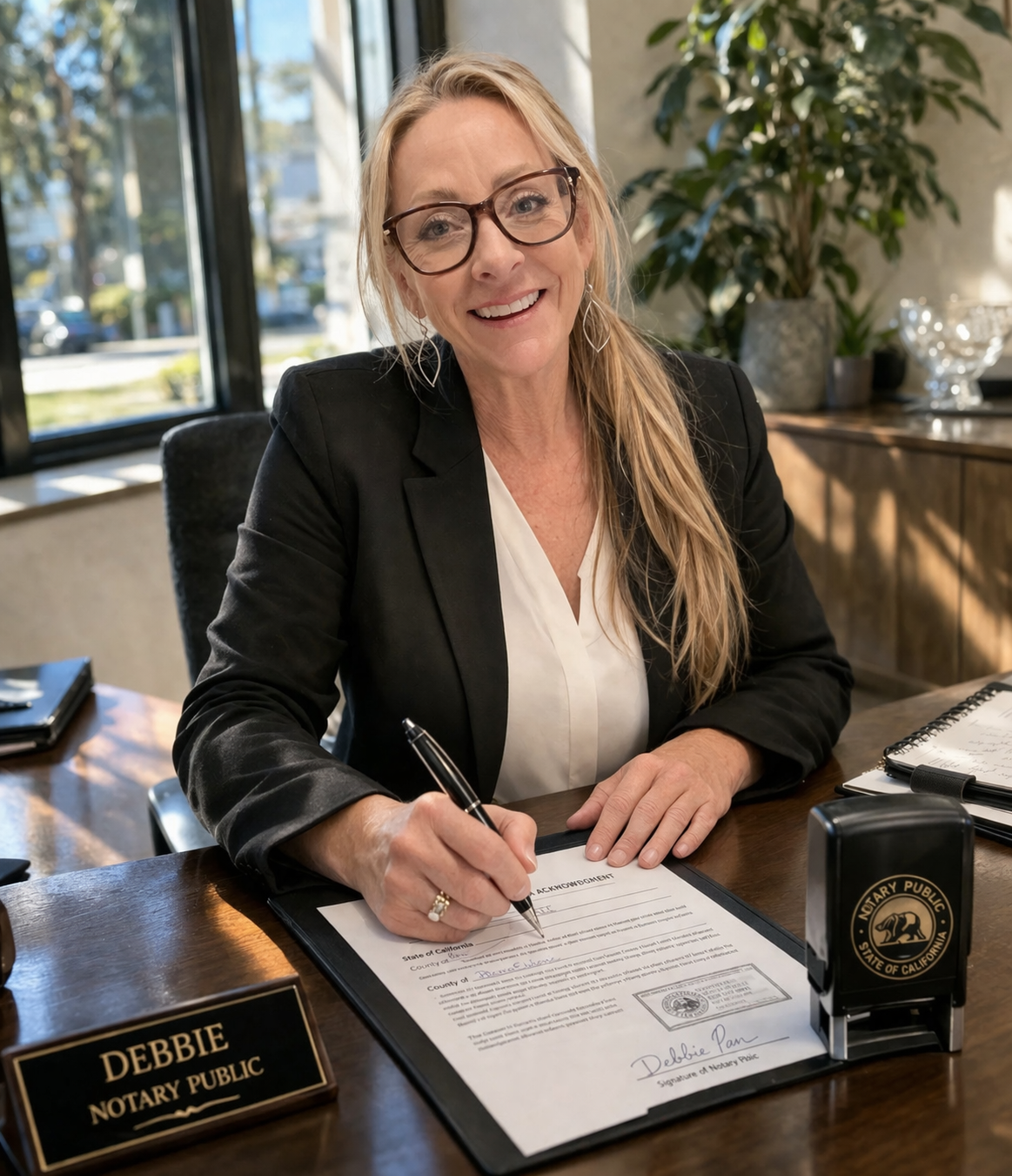
Deborah Cuha
Licensed Utah Notary Public (Commission #742886) with 30+ years of experience. NNA Certified Loan Signing Agent and Certified Remote Signing Agent. Based in Park City, serving Summit, Wasatch, and Salt Lake counties.
Read Full Bio →