Notary mistakes can range from minor clerical errors to serious procedural violations. Most mistakes are correctable, but the correction method depends on the type and severity of the error.
Even experienced notaries can make mistakes. When errors occur, the correction process depends on the type of mistake, when it is discovered, and whether the document has already been recorded or submitted. Understanding how notary errors work protects both signers and notaries in Utah.
Key Takeaways
- Minor clerical errors in the notarial certificate can often be corrected without re-signing
- Substantive errors typically require the document to be re-executed and re-notarized
- A notary can never alter the document itself, only the notarial certificate
- Errors discovered after recording may require a corrective affidavit or new deed
- Notary errors and omissions insurance protects notaries from financial liability for honest mistakes
Concerned about a notarization error?
NotaryLTD's experienced team minimizes mistakes with careful procedures. If a correction is needed, we handle it promptly at no additional charge.
Book NowTypes of Notary Mistakes
Notary errors fall into two broad categories: clerical mistakes and procedural mistakes. Clerical mistakes involve incorrect information on the notarial certificate, such as a wrong date, misspelled name, incorrect notarial act type, or missing information in the certificate. These are documentation errors that do not affect the underlying validity of the signing event.

Procedural mistakes are more serious. They involve failures in the notarization process itself. Examples include notarizing a document when the signer was not physically present, failing to verify the signer's identity, not administering an oath when a jurat was required, notarizing a document for which the notary has a financial interest, or failing to make a required journal entry. Procedural mistakes can render the notarization void and create significant legal problems.
A third category involves seal and stamp errors. Using an expired commission seal, applying the wrong seal, or producing an illegible seal impression can cause problems with document recording and acceptance. County recorders in Utah are strict about seal legibility, and an unclear seal impression is one of the most common reasons documents are rejected at the recording window.
Understanding the distinction between these categories matters because the correction method differs for each. Clerical errors are generally straightforward to fix. Procedural errors may require starting the entire notarization process over from scratch. Seal errors typically require re-stamping or re-notarizing.
Correcting Clerical Errors in the Certificate
When a notary discovers a clerical error in the notarial certificate before the document leaves their possession, the correction is relatively simple. The notary draws a single line through the incorrect information, writes the correct information nearby, and initials and dates the correction. The notary may also re-apply their seal near the correction to verify its authenticity. This method is standard practice for minor errors such as an incorrect date or a misspelled name in the certificate.
It is critical to understand that the notary can only correct errors in the notarial certificate, which is the notary's portion of the document. The notary must never alter the body of the document itself. If there is an error in the document's substantive content, that is the responsibility of the parties and possibly their attorney. The notary has no authority to change contract terms, property descriptions, names in the body of the document, or any other non-certificate content.
If the error is discovered after the document has left the notary's possession but before recording, the signer may need to bring the document back to the notary for correction. The notary can then make the correction using the line-through method described above. For documents that have multiple pages, the notary should ensure the correction is clearly associated with their notarial certificate and not with unrelated portions of the document.
Some clerical errors are so minor that they do not affect the document's validity at all. For example, if the notary wrote "April 5" instead of "April 6" but the journal entry and the document date both show April 6, the discrepancy is unlikely to cause a problem. However, best practice is to correct even minor errors to prevent potential challenges later.
Correcting Procedural Errors
Procedural errors are more serious and cannot be corrected by simply editing the certificate. If a notary failed to properly identify the signer, the only remedy is to have the signer appear again, present proper identification, and re-execute the notarization from scratch. The original notarization is void because the fundamental requirement of identity verification was not met.
If a jurat was performed without administering an oath, the document must be re-notarized with the oath properly administered. The notary cannot retroactively claim that an oath was given when it was not. The signer must appear, take the oath, and re-sign the document in the notary's presence. This is because the oath is a substantive component of a jurat that gives the sworn statement its legal force.
Notarizing a document without the signer's physical presence, whether in person or via a properly conducted RON session, renders the notarization invalid. There is no corrective measure for this violation other than having the signer actually appear and complete the notarization properly. A notary who knowingly performs this act faces disciplinary action, including potential revocation of their commission.
Conflicts of interest present another procedural problem. A notary who has a direct financial or beneficial interest in a transaction generally should not notarize documents for that transaction. Utah law does not contain a blanket prohibition as strict as some other states, but best practices and professional standards strongly discourage it. If a conflict of interest is discovered after notarization, the parties may need to re-execute the document with a different notary.
Need a re-notarization done right?
If a previous notarization had issues, NotaryLTD can re-notarize your documents with proper procedures. Available across Summit County and the Wasatch Front.
Book NowWhat Happens When Errors Are Found After Recording
When a notarization error is discovered after the document has been recorded with a county recorder's office, the correction process becomes more involved. Recorded documents are part of the public record, and they cannot simply be pulled back and edited. Instead, a corrective instrument must be recorded to address the error.
For real estate documents, the most common corrective instrument is a corrective affidavit or a correction deed. A corrective affidavit is a sworn statement that identifies the original document, describes the error, provides the correct information, and is itself notarized and recorded. The correction deed achieves the same result but in deed form, re-executing the transfer with the correct information.
The decision between a corrective affidavit and a correction deed depends on the nature of the error. Minor errors such as a misspelled name, wrong date, or incorrect legal description can typically be addressed with a corrective affidavit. More significant errors, such as the wrong grantor or grantee, may require a correction deed. In either case, consultation with a real estate attorney is advisable to ensure the correction is done properly and does not create additional title issues.
For loan signing documents, errors discovered after the loan has funded may require coordination between the notary, the title company, the lender, and the borrower. Title companies have established procedures for handling post-closing corrections, and they will typically direct the notary on the required steps. The notary should cooperate fully with the correction process and document every step in their journal.
Notary Liability and Insurance
Notaries in Utah can be held personally liable for damages caused by their errors, but the extent of liability depends on whether the mistake was an honest error or the result of negligence or intentional misconduct. An honest mistake, such as accidentally writing the wrong date, is unlikely to result in significant liability if it is promptly corrected. Negligent errors, such as failing to check a signer's ID, expose the notary to greater liability.
Errors and omissions insurance, commonly known as E&O insurance, is the primary protection available to notaries. E&O insurance covers the cost of claims arising from honest mistakes made during the course of notarial duties. It does not cover intentional misconduct, unauthorized practice of law, or criminal acts. Many notaries carry E&O insurance through their professional membership organizations, such as the National Notary Association.
Utah does not require notaries to carry E&O insurance, but it is strongly recommended for any notary who performs notarizations regularly. The cost is modest, typically ranging from $25 to $75 per year for basic coverage. Notary signing agents who work with title companies and lenders are usually required to carry E&O insurance as a condition of their approved signing agent status.
Notary bonds, which Utah does require, serve a different purpose than E&O insurance. The bond protects the public, not the notary. If a notary's error causes financial harm to a signer, the signer can make a claim against the notary's bond. If the bond pays out, the bonding company will seek reimbursement from the notary. E&O insurance protects the notary in this scenario by covering the reimbursement to the bonding company.
How to Prevent Notary Mistakes
Prevention is far better than correction. Experienced notaries develop habits and checklists that minimize the risk of errors. At NotaryLTD, our 30-plus years of experience have taught us which steps are most critical for error prevention.
First, always verify the signer's identity carefully and deliberately. Compare the ID photo to the signer's face, check the name spelling, verify the ID has not expired, and confirm the ID is government-issued. Do not rush this step, even when the signer is in a hurry. Identity verification errors are among the most serious and the most preventable.
Second, read the notarial certificate before completing it. Confirm that the certificate matches the type of notarial act being performed. If the document calls for a jurat, ensure you administer the oath. If it calls for an acknowledgment, ensure the signer acknowledges the signature. Mixing up acknowledgments and jurats is a common error that requires re-notarization to fix.
Third, complete the journal entry at the time of notarization, not later. Under SB 139, journal requirements become mandatory for all Utah notaries effective May 6, 2026. Creating the journal entry while the signer is still present ensures accuracy and provides a real-time record that can help correct any errors that might arise later.
Fourth, check your seal impression for legibility every time you apply it. Ink quality degrades over time, and a faint or partial seal impression is one of the most common reasons documents are rejected by county recorders. Keep a spare ink pad or replace your stamp regularly to maintain crisp, clear impressions. Visit our FAQ page for more tips on preparing documents for notarization.
How Signers Can Protect Themselves
Signers are not powerless when it comes to notary errors. Before leaving a notarization appointment, review the notarial certificate to confirm that your name is spelled correctly, the date is accurate, and the correct type of notarial act is indicated. If you notice an error, bring it to the notary's attention immediately so it can be corrected on the spot.
Keep copies of every notarized document. If an error surfaces later, having your own copy makes it easier to identify the specific problem and pursue a correction. For real estate documents, do not assume the title company or attorney will catch every error. Review your copies carefully after closing.
If you believe a notary committed a serious procedural error, such as failing to verify your identity or notarizing a signature that is not yours, you can file a complaint with the Utah Lieutenant Governor's office. The complaint process is straightforward and can result in an investigation that leads to disciplinary action against the notary, including commission revocation.
For documents that need to be re-notarized due to errors, contact the original notary first. Most professional notaries will correct their mistakes at no additional charge. At NotaryLTD, we stand behind every notarization we perform. If an error is discovered, contact us at 435-565-1333 and we will arrange a correction appointment promptly. For ongoing questions about pricing and service availability, our website has full details.
Trust your notarization to experienced professionals
NotaryLTD has 30+ years of experience, Commission #742886, and stands behind every notarial act. Available seven days a week, 9 AM to 9 PM.
Book NowFrequently Asked Questions
About the Author
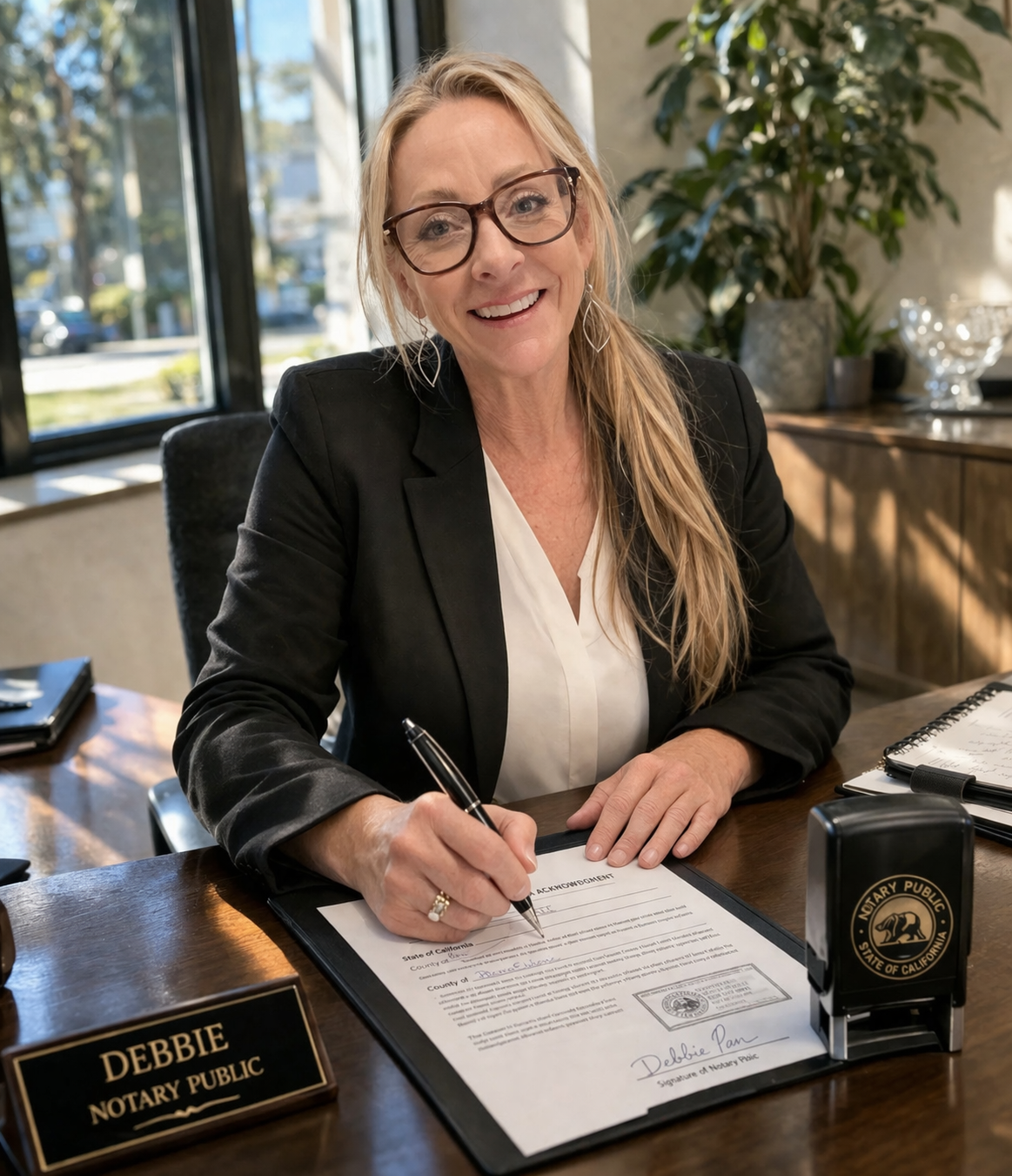
Deborah Cuha
Licensed Utah Notary Public (Commission #742886) with 30+ years of experience. NNA Certified Loan Signing Agent and Certified Remote Signing Agent. Based in Park City, serving Summit, Wasatch, and Salt Lake counties.
Read Full Bio →