Utah law sets clear maximums: $10 per notarial act for in-person service and $25 for remote online notarization. Overcharging is a violation of state regulations.
Utah caps notary fees at $10 per in-person act and $25 per RON act. Here is the complete guide to the legal limits on notary charges.
Key Takeaways
- In-person notarization: $10 maximum per notarial act.
- Remote online notarization: $25 maximum per notarial act.
- Travel fees are separate and not subject to the per-act cap.
- Overcharging can result in commission revocation or suspension.
- These maximums apply to all types of notarial acts equally.
Need a notary who follows the rules?
NotaryLTD is fully compliant with Utah fee regulations and provides transparent pricing on every appointment.
Book NowStatutory Fee Maximums
Utah Code sets the maximum at $10 for in-person notarial acts and $25 for remote online notarization acts.

The Utah legislature has established clear fee caps to protect consumers from excessive notary charges. The maximum fee for any in-person notarial act is $10. This applies to every type of notarial act recognized under Utah law, including acknowledgments, jurats, oaths, affirmations, signature witnessing, and copy certifications. There is no distinction between document types or complexity levels. A simple one-page affidavit and a 50-page trust document both carry the same $10 per-act maximum.
For remote online notarization, the maximum is $25 per act. The higher ceiling reflects the technology costs that RON notaries must bear, including platform subscriptions, identity verification systems, video recording and storage, and digital certificate infrastructure. Even at $25, Utah's RON fees are competitive with other states that have authorized remote notarization.
These caps are per notarial act, not per document and not per signature. Understanding the distinction matters. A single document might require only one notarial act, or it might require several if multiple signers each need separate notarizations. Conversely, multiple documents might require only one notarial act if they are bundled under a single acknowledgment certificate. Your notary will explain how many acts your documents require. Learn more on our pricing page.
What Counts as a Notarial Act
A notarial act is a specific function performed by the notary, such as an acknowledgment, jurat, or oath, and each act carries a separate fee.
Utah recognizes several types of notarial acts, each of which can be charged separately up to the maximum fee. An acknowledgment is when the signer appears before the notary and confirms that they signed the document willingly. A jurat is when the signer signs the document in front of the notary and takes an oath or affirmation that the contents are true. An oath or affirmation is a verbal pledge of truthfulness, sometimes administered independently of a document.
A copy certification verifies that a copy of a document is a true and accurate reproduction of the original. A signature witnessing is when the notary observes a person signing a document. Each of these acts, when performed separately, constitutes a separate notarial act that can be charged up to the maximum fee.
In practice, most notarization appointments involve one or two acts. A power of attorney typically requires one acknowledgment. A real estate closing might involve six to ten separate acts across multiple documents. A loan signing package can include 15 or more individual notarial acts. Understanding the per-act structure helps you estimate your total cost accurately.
If you are unsure how many notarial acts your documents require, contact us at 435-565-1333 or check our FAQ for guidance. We will review your documents and provide an exact count before your appointment.
Fees Beyond the Cap: What Is Allowed
Notaries can charge separately for travel, printing, copying, and other non-notarial services outside the per-act cap.
The $10 and $25 caps apply specifically to notarial acts. Several other charges fall outside these caps and are perfectly legal when disclosed upfront. Travel fees for mobile notary visits are the most common additional charge. As discussed in our travel fee FAQ, these are calculated at the IRS mileage rate of $0.70 per mile round-trip.
Printing and copying fees may apply if the notary provides document printing services at your location. If you ask the mobile notary to print your 20-page document, they can charge a reasonable per-page fee for that service. Similarly, scanning fees may apply if you need the notary to scan and email completed documents.
Administrative or document preparation fees are sometimes charged for complex signing packages, particularly in loan closings. These fees compensate the notary for reviewing and organizing large document sets, confirming that all pages are present and in order, and ensuring that signing instructions are followed correctly.
The critical requirement is disclosure. All fees, whether notarial or ancillary, must be disclosed to the signer before the appointment. A notary who surprises you with undisclosed fees after the service is completed is acting unprofessionally and potentially in violation of consumer protection standards. At NotaryLTD, every fee is quoted upfront.
Need a clear, upfront fee quote?
Call 435-565-1333 or book online. We disclose every fee before you commit.
Book NowConsequences of Overcharging
A notary who charges more than the legal maximum faces commission suspension, revocation, and potential legal liability.
Overcharging is not just bad business. It is a regulatory violation with real consequences. The Utah Lieutenant Governor's office, which issues and oversees notary commissions, has the authority to investigate complaints about fee violations. If a notary is found to have charged more than the statutory maximum for a notarial act, their commission can be suspended or permanently revoked.
Beyond commission action, an overcharging notary may face civil liability. A signer who was overcharged can seek restitution for the excess amount. In cases of systematic overcharging, the notary could face broader legal consequences under Utah's consumer protection laws.
The reputational damage is equally significant. In the age of online reviews and social media, a single complaint about overcharging can destroy a notary's business. The notary community in Utah is relatively small, and word travels fast among title companies, law firms, and signing services that provide referrals.
If you believe a notary has charged you more than the legal maximum, you have the right to file a complaint with the Utah Lieutenant Governor's office. Provide documentation of the fees charged, the services performed, and any receipts or invoices. The office will investigate and take appropriate action.
How SB 139 May Affect Notary Fees
SB 139, effective May 6, 2026, adds journal requirements that could push notaries to charge closer to the maximum.
Utah's Senate Bill 139 introduces mandatory journal-keeping for all notarial acts starting May 6, 2026. While the bill does not change the fee caps themselves, it adds administrative burden that may influence pricing. Notaries will be required to maintain detailed records of every transaction, including signer identification, document details, and the type of notarial act performed.
This additional record-keeping takes time. Each appointment will require several extra minutes for journal entries, which adds up over the course of a day. Some notaries who previously charged less than the maximum may adjust their fees upward to compensate for the additional time and compliance costs.
The SB 139 requirements also include updated identification standards. Notaries must be more thorough in their ID verification procedures, which adds another layer of time and diligence to each appointment. These changes are positive for consumer protection but they increase the notary's workload.
NotaryLTD has already implemented SB 139-compliant journal procedures ahead of the May 2026 effective date. Our commission number 742886 is valid through April 30, 2029, and we maintain full compliance with all current and upcoming Utah notary regulations. Learn about our compliance standards on our mobile notary services page.
How to Verify Fair Pricing
Ask for an itemized quote, compare the per-act fee to the legal maximum, and verify travel fee calculations independently.
Protecting yourself from overcharging is straightforward. Before booking any notary appointment, ask for a complete breakdown of all fees. The quote should itemize the per-act notarial fee, the number of acts, the travel fee and how it was calculated, and any ancillary charges for printing, copying, or other services.
Compare the per-act fee to the legal maximum. If the notary quotes more than $10 per act for in-person service or more than $25 per act for RON, they are exceeding the legal limit. Politely point this out and, if they do not correct the quote, find another notary.
Verify travel fees by checking the distance yourself using any mapping application. Calculate the round-trip mileage and multiply by $0.70 per mile. If the notary's travel fee significantly exceeds this calculation, ask for an explanation. Reasonable variations can occur due to routing differences, but large discrepancies should be questioned.
NotaryLTD believes in complete pricing transparency. Every quote we provide is itemized, and we welcome questions about any line item. Call us at 435-565-1333 or visit our booking page to get your transparent quote today.
Need a notary with honest, legal pricing?
30+ years of experience and full regulatory compliance. Call 435-565-1333 for your free quote.
Book NowFrequently Asked Questions
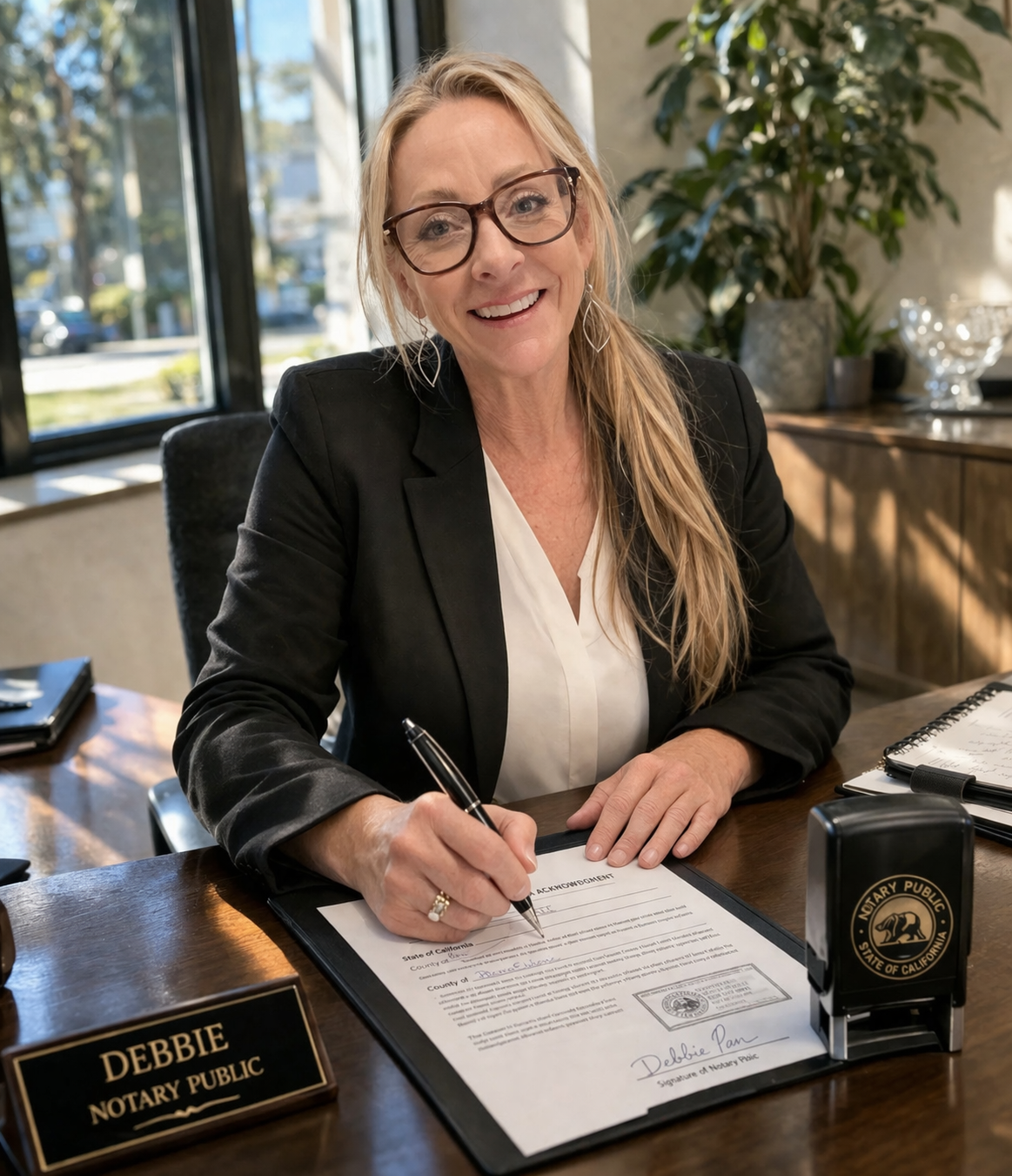
About the Author
Deborah Cuha
Licensed Utah Notary Public (Commission #742886) with 30+ years of experience. NNA Certified Loan Signing Agent and Certified Remote Signing Agent. Based in Park City, serving Summit, Wasatch, and Salt Lake counties.
Read Full Bio →