Utah notaries accept valid government-issued photo IDs with a signature and physical description. Driving Privilege Cards are not accepted.
Utah notaries accept government-issued photo IDs with a signature and physical description. Driving Privilege Cards are not accepted.
Key Takeaways
- Accepted: Utah driver license, US passport, state ID card, military ID with photo.
- Not accepted: Utah Driving Privilege Cards, student IDs, expired IDs.
- ID must include a photograph, signature, and physical description.
- Credible witnesses can substitute for ID in certain circumstances.
- SB 139 updates ID requirements effective May 6, 2026.
Need to get documents notarized?
NotaryLTD verifies your ID quickly and professionally. Bring a valid government photo ID to your appointment.
Book NowAccepted Forms of Identification
Utah notaries accept valid government-issued photo IDs with three required elements: photograph, signature, and physical description.

The foundation of every notarization is identity verification. Utah law requires notaries to positively identify every signer before performing a notarial act. The primary method is through a government-issued identification document that meets three requirements. It must contain a clear photograph of the bearer, a specimen signature for comparison, and a physical description such as height, weight, eye color, or date of birth.
The most commonly presented ID is a valid Utah driver license. It meets all three requirements and is immediately recognizable to Utah notaries. Out-of-state driver licenses are also accepted as long as they are current and contain the required elements. Most US driver licenses include a photo, signature, and physical descriptors.
A United States passport or passport card is another excellent form of identification. Passports include a photograph and physical description, and while they do not have a traditional signature line on the ID page, the signature page is part of the document. Foreign passports are also generally acceptable if they contain the required elements.
State-issued identification cards, which are available to non-drivers, meet the same standards as driver licenses and are fully acceptable. Military identification cards from the US armed forces are accepted when they include a photograph, though not all military IDs contain a physical description or signature. The notary will evaluate each ID on its merits.
For questions about a specific ID type, call NotaryLTD at 435-565-1333 before your appointment. We can confirm whether your identification will be accepted, saving you a wasted trip. Visit our FAQ page for more details.
IDs Not Accepted for Notarization
Driving Privilege Cards, student IDs, employee badges, and expired documents are not acceptable identification for notarization.
The most important exclusion for Utah residents to understand is the Driving Privilege Card. This card is issued by the Utah Driver License Division to individuals who cannot provide proof of legal presence in the United States. While it is a valid document for driving purposes, it is explicitly excluded from the forms of identification that notaries can accept. This is not a policy choice by individual notaries. It is a legal requirement that applies statewide.
Student identification cards, regardless of the institution, are not government-issued and do not meet the requirements. Employee identification badges, even from government agencies, are typically not sufficient on their own because they often lack a physical description and sometimes lack a signature.
Expired identification documents are generally not accepted. An ID that has passed its expiration date may no longer accurately represent the bearer's appearance, and more importantly, an expired document may indicate that the person is unable to obtain a renewed ID, which could be relevant to their legal status or identity.
Social Security cards, birth certificates, and credit cards are not acceptable as primary identification for notarization. While these documents contain personal information, they do not include photographs and cannot serve as the basis for identity verification. They may be used as supporting documents in some circumstances but never as the sole form of ID.
If your only identification is one that falls outside the accepted categories, you may still be able to proceed with notarization through the credible witness process. Read more about this option in our FAQ section.
The Credible Witness Alternative
If you lack acceptable ID, a credible witness who knows you personally can vouch for your identity under oath.
Utah law provides an alternative identification method for signers who cannot present acceptable identification documents. A credible witness is a person who personally knows the signer, is not a party to or beneficiary of the transaction, has no financial interest in the document, and can be positively identified by the notary through their own acceptable ID.
The credible witness takes an oath or affirmation before the notary, swearing that they personally know the signer and that the signer is who they claim to be. The notary records the credible witness's information in their journal, including the witness's name, address, and the identification document used to verify the witness's identity.
This process is particularly useful for elderly individuals who may have let their identification lapse, people who have recently lost their wallet or had their ID stolen, and individuals in hospital or care facility settings who may not have their ID readily available. It is a legal and well-established practice that allows notarization to proceed when standard identification is not available.
If you anticipate needing a credible witness for your notarization, let us know when you schedule your appointment. We will walk you through the requirements and make sure your witness is prepared for the process. NotaryLTD handles credible witness notarizations regularly and can guide you through the procedure smoothly.
Not sure if your ID qualifies?
Call 435-565-1333 before your appointment and we will confirm your identification meets the requirements.
Book NowRON Identity Verification Requirements
Remote online notarization adds credential analysis and knowledge-based authentication to the standard ID check.
For remote online notarization sessions, identity verification goes beyond simply viewing an ID document. The process includes two additional layers. First is credential analysis, where the technology platform examines the ID document presented to the camera for security features, authenticity markers, and signs of tampering or alteration. This automated check adds a layer of fraud prevention that visual inspection alone cannot provide.
Second is knowledge-based authentication, where the signer answers questions generated from their personal history, credit records, and public databases. These questions are specific enough that only the true identity holder should be able to answer them correctly. The signer must answer a threshold number of questions correctly to pass verification.
These additional layers mean that RON identity verification is actually more rigorous than in-person verification. The combination of ID credential analysis, knowledge-based authentication, and live video observation creates a multi-factor identity proof that is extremely difficult to defeat. This is one reason why many lenders and title companies prefer RON over traditional notarization for high-value transactions.
For your RON session with NotaryLTD, you will need the same valid government-issued photo ID you would bring to an in-person appointment. Have it ready before the video session begins so the verification process goes smoothly. Our RON services page has a complete preparation checklist.
SB 139 ID Requirement Updates
SB 139, effective May 6, 2026, updates identification standards and strengthens verification requirements for all notarial acts.
Utah's Senate Bill 139 brings several changes to the identification verification landscape for notaries. The bill strengthens the requirements for how notaries must document and verify signer identification, adding specificity to the journal entries required for each transaction.
Under SB 139, notaries must record detailed information about the identification document presented, including the document type, issuing authority, document number, and expiration date. This creates a more thorough paper trail that enhances fraud detection and provides better evidence in the event of a dispute.
The bill also reinforces the prohibition on certain forms of identification, including Driving Privilege Cards, and provides clearer guidance on what constitutes acceptable identification. For notaries, this means more training and attention to detail during the ID verification step. For consumers, it means greater protection against identity fraud.
NotaryLTD has already updated our procedures to comply with SB 139 ahead of the May 6, 2026 effective date. Commission number 742886, valid through April 30, 2029, reflects our commitment to staying current with all regulatory requirements. We are ready to serve you under the new standards.
Prepare Your ID Before Your Appointment
Check your ID expiration date, ensure the name matches your documents, and have a backup ID if possible.
A few minutes of preparation can prevent delays and frustration at your notary appointment. First, check that your identification is not expired. If it expires within the next few weeks, consider renewing it before your appointment to avoid any issues. Second, compare the name on your ID to the name on the documents being notarized. If your ID says "Robert A. Smith" but your document says "Bob Smith," the notary will need to reconcile that difference.
Third, if you have two forms of acceptable ID, bring both. While only one is required, having a backup can save the appointment if there is an issue with your primary ID, such as a cracked card that makes the photo unreadable or damage that obscures the signature.
Fourth, if you know you will need a credible witness, arrange for that person to accompany you to the appointment. The witness must also bring their own valid ID. Showing up without a witness when one is needed means the notarization cannot proceed.
For RON sessions, have your ID next to your computer before the session starts. Test your webcam to make sure it can clearly capture the details on your ID card. A blurry or unreadable ID image will slow down the credential analysis process. Visit our contact page to schedule your appointment and get personalized preparation guidance.
Need a professional notary who verifies ID correctly?
30+ years experience and NNA certified. Call 435-565-1333 or book your appointment online.
Book NowFrequently Asked Questions
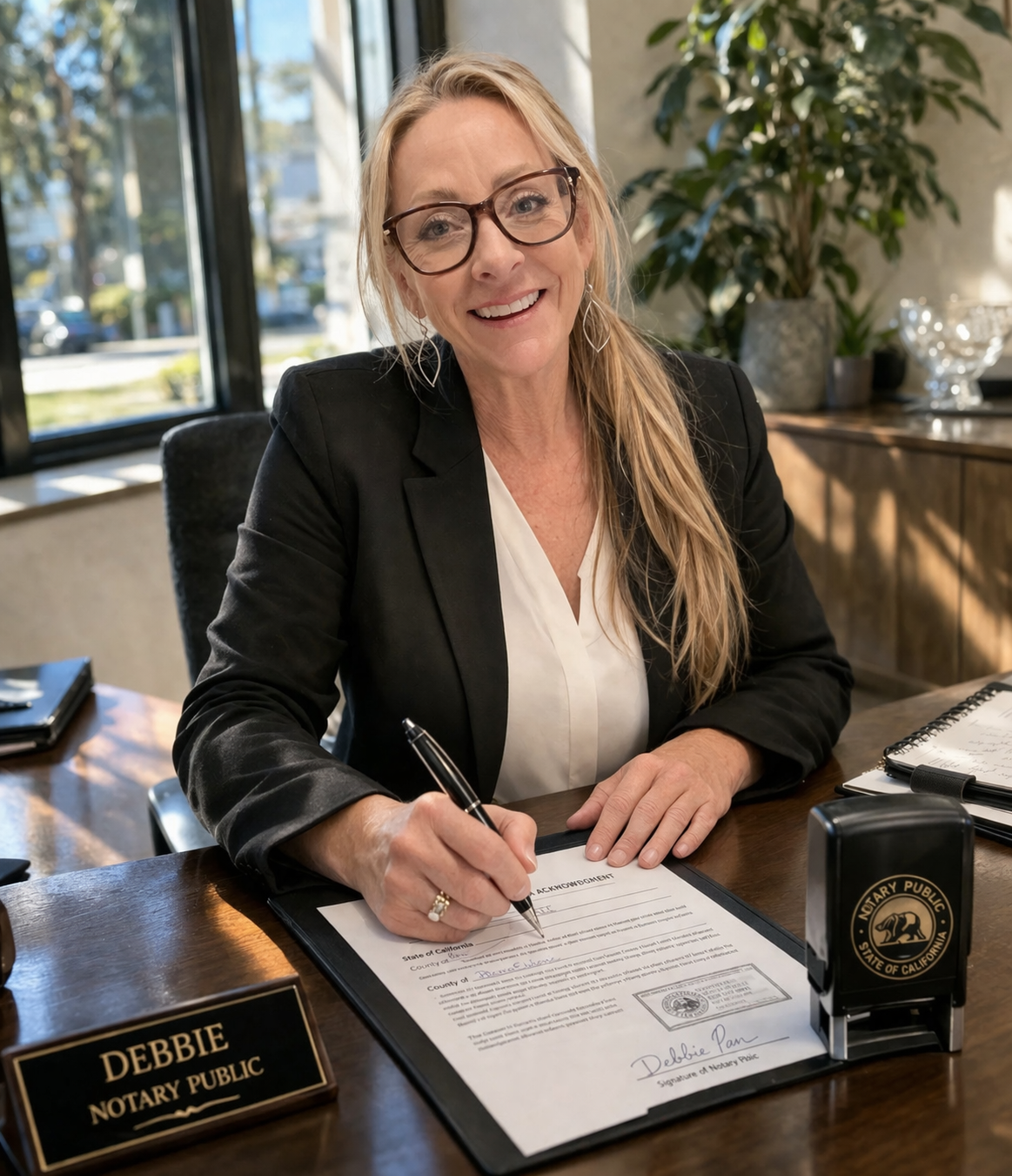
About the Author
Deborah Cuha
Licensed Utah Notary Public (Commission #742886) with 30+ years of experience. NNA Certified Loan Signing Agent and Certified Remote Signing Agent. Based in Park City, serving Summit, Wasatch, and Salt Lake counties.
Read Full Bio →