A loan signing agent is a specially trained notary public who guides borrowers through mortgage closing documents, ensuring every signature, initial, and date is placed correctly.
A loan signing agent is a specially trained notary who handles the signing of mortgage and loan documents at the closing table.
Key Takeaways
- Loan signing agents are notaries with specialized training in mortgage closing documents
- They ensure all documents are signed, initialed, and dated correctly
- NNA-certified signing agents carry errors and omissions insurance for your protection
- NotaryLTD offers certified loan signing services throughout Park City and Summit County
- A typical signing takes 45-60 minutes and can be done at your location
Closing on a home in Park City?
Our NNA-certified loan signing agent comes to you with 30+ years of experience. Available 7 days a week.
Book NowWhat Does a Loan Signing Agent Do?
A loan signing agent notarizes mortgage documents and ensures borrowers correctly complete every page of their loan package. They serve as a neutral third party hired by the title company, lender, or signing service to facilitate the closing process.

Unlike a general notary public who handles a wide variety of documents, a loan signing agent specializes exclusively in real estate and mortgage transactions. They are trained to identify every document in a loan package, know where each signature, initial, and date belongs, and can walk you through the purpose of each form without providing legal advice.
When you close on a property in Park City or anywhere in Summit County, the loan signing agent typically comes to your home, office, or a mutually convenient location. They carry the entire loan package provided by the title company, verify your identity using a valid government-issued photo ID, and guide you through each document methodically. Once every page is signed and notarized, the agent returns the completed package to the title company or lender for recording.
At NotaryLTD, our signing agent holds NNA certification and has over 30 years of experience handling complex closings. Whether you are purchasing a primary residence, a vacation home, or refinancing an existing mortgage, we ensure your closing is smooth and error-free.
Loan Signing Agent vs. Notary Public
A loan signing agent is a notary public with additional specialized training in mortgage documents, while a regular notary handles general notarization tasks.
Every loan signing agent is a commissioned notary public, but not every notary public qualifies as a loan signing agent. The distinction matters because mortgage closings involve complex document packages that can contain 100 to 200 pages. A general notary might not know how to properly walk a borrower through a HUD-1 settlement statement, a deed of trust, or the various federal disclosure forms that accompany a loan.
Loan signing agents typically complete additional certification through organizations like the National Notary Association (NNA). This training covers all aspects of the closing process, including document identification, common errors to watch for, and the strict procedures lenders require. Many signing agents also carry errors and omissions (E&O) insurance, which protects both the borrower and the lender if a mistake occurs during the signing.
A standard notary public can notarize any document that requires a notarial act, such as powers of attorney, affidavits, and acknowledgments. They typically work from a fixed location like a bank, law office, or shipping store. A loan signing agent, by contrast, almost always travels to the signer's preferred location and works on the lender's or title company's schedule, which often includes evenings and weekends.
If you are closing on a property, you specifically need a loan signing agent, not just any notary. The difference can mean the gap between a smooth closing and one that gets delayed by improperly executed documents.
Why You Need a Certified Signing Agent
A certified signing agent protects you from costly errors, delays, and potential legal issues during your mortgage closing.
Mortgage lenders have strict requirements for how loan documents must be executed. Even a small mistake, such as a missing initial, a wrong date, or an improperly notarized signature, can delay your closing by days or even weeks. In competitive real estate markets like Park City, a delayed closing can mean losing the property entirely.
Certified signing agents through the NNA have passed a comprehensive background screening and examination. They carry a surety bond and typically maintain E&O insurance with coverage of at least $25,000. This means if an error does occur, there is insurance coverage to address it rather than leaving you exposed.
Additionally, certified signing agents understand the importance of document integrity. They verify that all pages are present, that no pages have been altered, and that the information on the documents matches what you were told by your lender. While they cannot provide legal advice or explain the financial terms of your loan, they can point you to the right sections where key information like your interest rate, monthly payment, and closing costs are displayed.
For your Park City or Summit County closing, choosing an NNA-certified signing agent with local experience means someone who understands the unique aspects of Utah real estate transactions, including resort property requirements and seasonal timing considerations.
Need an NNA-certified signing agent?
NotaryLTD provides professional loan signing services throughout Summit, Salt Lake, and Wasatch counties. Commission #742886.
Schedule Your SigningWhat to Expect During a Loan Signing
A typical loan signing lasts 45 to 60 minutes and involves reviewing and signing your complete mortgage document package with the signing agent.
Before the appointment, you should receive a copy of your Closing Disclosure from your lender at least three business days in advance. Review it carefully and note any questions for your lender or real estate attorney. The signing agent cannot answer questions about your loan terms, but your lender should address all concerns before the signing appointment.
On the day of the signing, bring two forms of valid government-issued photo identification. Utah law requires that your ID contain a photograph, a physical description, and your signature. A valid driver's license or passport typically meets these requirements. Note that Utah Driving Privilege Cards are not accepted for notarization purposes.
The signing agent will arrive with the full loan package. They will verify your identity, explain the general purpose of each document category, and guide you through the signing process page by page. You will sign and initial dozens of pages, including the promissory note, deed of trust, closing disclosure, right of rescission notices (for refinances), and various federal and state disclosures.
Once all documents are signed, the agent will apply their notary seal and signature to the documents requiring notarization. They will then return the completed package to the title company, usually via overnight courier, to meet recording deadlines.
How to Prepare for Your Loan Signing
Prepare by reviewing your Closing Disclosure, gathering valid photo IDs, and confirming your signing appointment time and location.
Start by carefully reviewing your Closing Disclosure as soon as you receive it. Compare the loan amount, interest rate, monthly payment, and closing costs against what your lender originally quoted. If anything looks different, contact your lender immediately to resolve discrepancies before the signing appointment.
Gather your identification documents. You will need at least one government-issued photo ID with your photograph, signature, and physical description. Having a second form of ID available is recommended in case there are any questions about your primary identification. Make sure the name on your ID matches the name on the loan documents exactly. Even small differences, like using a middle initial on one but a full middle name on the other, can cause problems.
Confirm the logistics of your signing appointment. Know the exact time, location, and how long the appointment is expected to take. If you are signing at a location other than your home, arrive a few minutes early. If the signing agent is coming to you, ensure you have a quiet space with good lighting and a table large enough to spread out documents.
Finally, have a cashier's check or wire transfer confirmation ready if you are required to bring funds to closing. Personal checks are typically not accepted for closing costs or down payments. Your title company will provide the exact amount and payment instructions in advance.
Cost of Loan Signing Services
Loan signing agent fees typically range from $75 to $200, with the cost usually covered by the title company or lender as part of your closing costs.
In most transactions, the borrower does not pay the signing agent directly. The fee is included in the closing costs you see on your Closing Disclosure, typically listed under "Notary Fee" or "Signing Agent Fee." The title company or signing service hires and pays the agent on behalf of the transaction.
At NotaryLTD, our standard notarization fee is $10 per notarial act for in-person signings. When we travel to your location, a mileage fee of $0.70 per mile applies. For loan signing packages, which involve multiple notarial acts and dedicated appointment time, the total fee reflects the complexity and number of documents involved. We also offer Remote Online Notarization (RON) at $25 per notarial act for borrowers who prefer to sign electronically.
Visit our pricing page for a complete breakdown of our fees. We maintain transparent pricing with no hidden charges, and our rates are competitive throughout the Park City, Salt Lake City, and Wasatch County areas.
Choosing a Loan Signing Agent in Utah
Choose an agent who is NNA-certified, background-screened, carries E&O insurance, and has experience with Utah real estate closings.
When selecting a loan signing agent for your closing, verify their credentials. An NNA-certified signing agent has completed rigorous training and passed a comprehensive exam. Ask whether they carry errors and omissions insurance, which provides an additional layer of protection for your transaction. A current notary commission with the state of Utah is a baseline requirement, but certification and insurance go above and beyond.
Experience matters, especially in unique markets like Park City. Vacation properties, second homes, and resort condominiums can involve additional documentation that a less experienced agent might not recognize. Look for an agent who has handled hundreds of closings and is familiar with the specific requirements of Summit County recordings.
Availability is another important factor. Real estate transactions often require flexibility with scheduling, including evenings, weekends, and last-minute appointments. NotaryLTD is available seven days a week, from 9 AM to 9 PM, and we regularly accommodate urgent closing requests. Call us at 435-565-1333 or visit our contact page to schedule your signing.
Ready to schedule your loan signing?
NNA-certified, 30+ years experience, available 7 days a week throughout Park City and beyond.
Book Your SigningFrequently Asked Questions
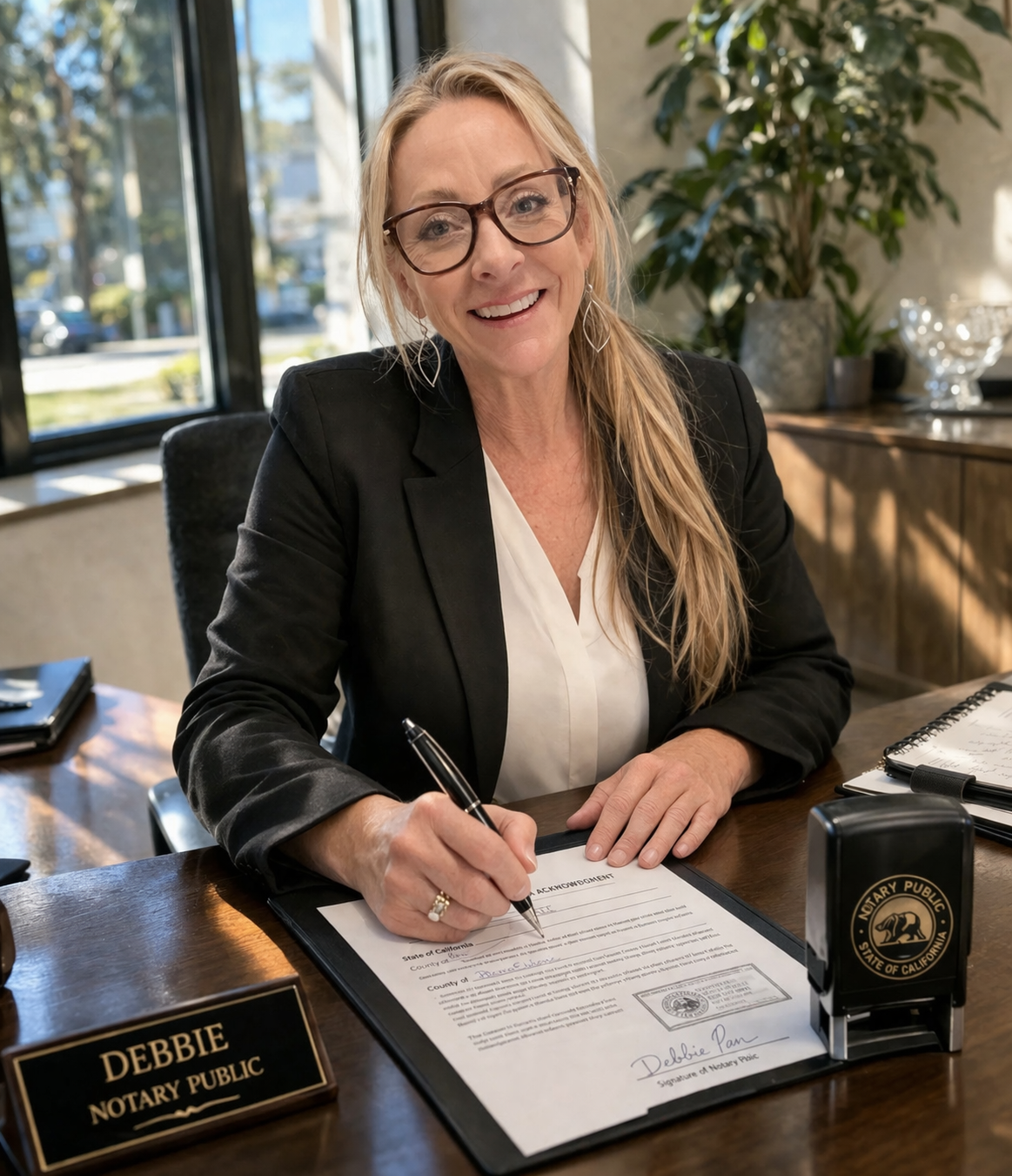
About the Author
Deborah Cuha
Licensed Utah Notary Public (Commission #742886) with 30+ years of experience. NNA Certified Loan Signing Agent and Certified Remote Signing Agent. Based in Park City, serving Summit, Wasatch, and Salt Lake counties.
Read Full Bio →