RON in Utah uses a live video call, digital identity verification, and tamper-evident electronic seals. Here is the complete step-by-step process.
RON in Utah uses live video, digital ID verification, and tamper-evident electronic seals. Here is the complete step-by-step process.
Key Takeaways
- RON uses live video conferencing between the signer and notary.
- Identity is verified through credential analysis and knowledge-based authentication.
- Documents are signed electronically with tamper-evident digital seals.
- The entire session is recorded for legal protection.
- Sessions take 15 to 20 minutes and cost up to $25 per act.
Need a RON session?
NotaryLTD offers RON 7 days a week, 9 AM to 9 PM. Complete your notarization from home in under 20 minutes.
Book NowStep 1: Schedule and Upload Documents
You book your session, upload your documents to the secure platform, and receive a session link.

The RON process begins when you contact NotaryLTD to schedule your session. Call 435-565-1333 or visit our booking page. We confirm the number of documents, the type of notarial acts required, and your preferred session time. Then we send you a link to the secure RON platform.
Through this link, you upload the documents that need notarization. The platform is encrypted and your documents are protected throughout the process. You can upload PDF files, Word documents, or scanned images. If your documents are not in digital format, you will need to scan or photograph them before the session.
Once uploaded, the notary reviews the documents to ensure they are complete and ready for notarization. If any issues are identified, such as missing fields or unclear notarial requirements, we will contact you before the session to resolve them. This pre-session review helps ensure the actual RON session runs smoothly.
Step 2: Identity Verification
Before the video call begins, you verify your identity through credential analysis and knowledge-based authentication.
RON identity verification is more rigorous than in-person verification, adding two technology-driven layers beyond the standard ID check. The first layer is credential analysis. You present your government-issued photo ID to your webcam, and the platform examines it for security features, authenticity markers, and signs of tampering. The technology checks watermarks, holograms, barcode data, and printing patterns that are difficult to replicate.
The second layer is knowledge-based authentication. The system generates questions from your personal history, including credit records, address history, and public databases. You answer these questions in a timed format. The questions are specific enough that only the true identity holder should be able to answer them. Common questions involve past addresses, vehicle registrations, mortgage lenders, or previous employers.
This dual-verification process creates a strong identity proof that exceeds what is possible with a visual ID check alone. It is one of the reasons that lenders, title companies, and courts increasingly accept and even prefer RON-notarized documents. Visit our RON services page for more on the verification process.
Step 3: Live Video Session
You join a secure video call where the notary guides you through document review and electronic signing in real time.
Once your identity is verified, the live video session begins. You see the notary on your screen, and the notary sees you. The session is recorded from start to finish, creating a permanent audio-video record of the entire notarization process.
The notary shares the document on the platform so both of you can view it simultaneously. The notary reviews each document with you, explains the type of notarial act being performed, and confirms your willingness to sign. For jurats, the notary administers the oath or affirmation via video. For acknowledgments, the notary confirms that you are signing willingly.
You apply your electronic signature to each document at the designated locations. The platform provides clear indicators for where to sign, initial, and date. The electronic signature is legally equivalent to a handwritten signature for documents notarized via RON in Utah.
After you sign, the notary applies the digital notarial seal and certificate. The seal is tamper-evident, meaning any subsequent alterations to the document will be immediately detectable. The notary completes their journal entry, and the session concludes.
Ready for your first RON session?
The process is simple and guided. We walk you through every step on the video call.
Book NowStep 4: Receive Your Notarized Documents
You receive the digitally notarized documents immediately after the session, ready to send to the receiving party.
Within minutes of the session ending, you receive the completed, notarized documents electronically. These are typically delivered as PDF files with the digital seal and notarial certificate embedded. You can download them to your computer, email them to the receiving party, or print physical copies as needed.
The digital notarial seal and certificate are embedded in the document's metadata, providing a layer of security that physical paper documents cannot match. Anyone who receives the document can verify the seal's authenticity and confirm that the document has not been altered since notarization.
The session recording is stored securely by NotaryLTD for the required retention period. This recording serves as evidence of the notarization and can be retrieved if any questions arise about the transaction. The combination of identity verification records, session recording, and tamper-evident documentation creates a robust evidence chain that protects all parties.
Technical Requirements
You need a computer or tablet with a webcam, microphone, and stable internet connection. No special software required.
RON is designed to be accessible to anyone with basic technology. You need a computer, laptop, or tablet with a functioning webcam and microphone. Most modern laptops have built-in webcams and microphones that work perfectly. Desktop computers may need an external webcam.
A stable internet connection is important for maintaining the video call quality. Wired ethernet connections provide the most reliable experience, but strong WiFi works well too. Cellular data connections can work for tablet sessions but may experience interruptions in areas with weak signal.
The RON platform runs in your web browser, so there is no software to install. You will receive a session link that opens directly in Chrome, Firefox, Safari, or Edge. Make sure your browser is updated to the latest version for the best experience.
Before your session, test your setup. Open your camera app and confirm the webcam produces a clear image. Test your microphone by recording a short audio clip. Have your government-issued photo ID next to your computer, not in your wallet, so you can present it to the camera quickly. Our FAQ page has a complete technical preparation checklist.
Security and Legal Protections
RON sessions are encrypted, recorded, and sealed with tamper-evident technology that exceeds in-person security standards.
Security is a top concern for anyone signing legal documents online, and rightfully so. RON platforms address this with multiple layers of protection. The video connection is encrypted end-to-end, preventing interception. The identity verification process uses multi-factor authentication that is more rigorous than showing an ID card to a person.
The session recording provides an irrefutable record of who signed, what they signed, and when they signed it. In-person notarizations produce no such record. If a dispute arises about whether a signer was present, whether they appeared competent, or whether they signed willingly, the video recording provides clear evidence.
The tamper-evident digital seal means that any alteration to the document after notarization breaks the seal and is immediately detectable. Paper documents, by contrast, can be physically altered in ways that may not be obvious. Digital documents with cryptographic seals provide stronger integrity protection.
Utah law expressly authorizes RON and establishes the legal framework for its use. Documents notarized via RON carry the same legal weight as those notarized in person. NotaryLTD uses a state-approved RON platform that meets all Utah requirements for security, recording, and identity proofing. Our commission number 742886 is valid through April 30, 2029.
Need a secure online notarization?
Bank-grade encryption, video recording, and tamper-evident seals. Book your RON session today.
Book NowFrequently Asked Questions
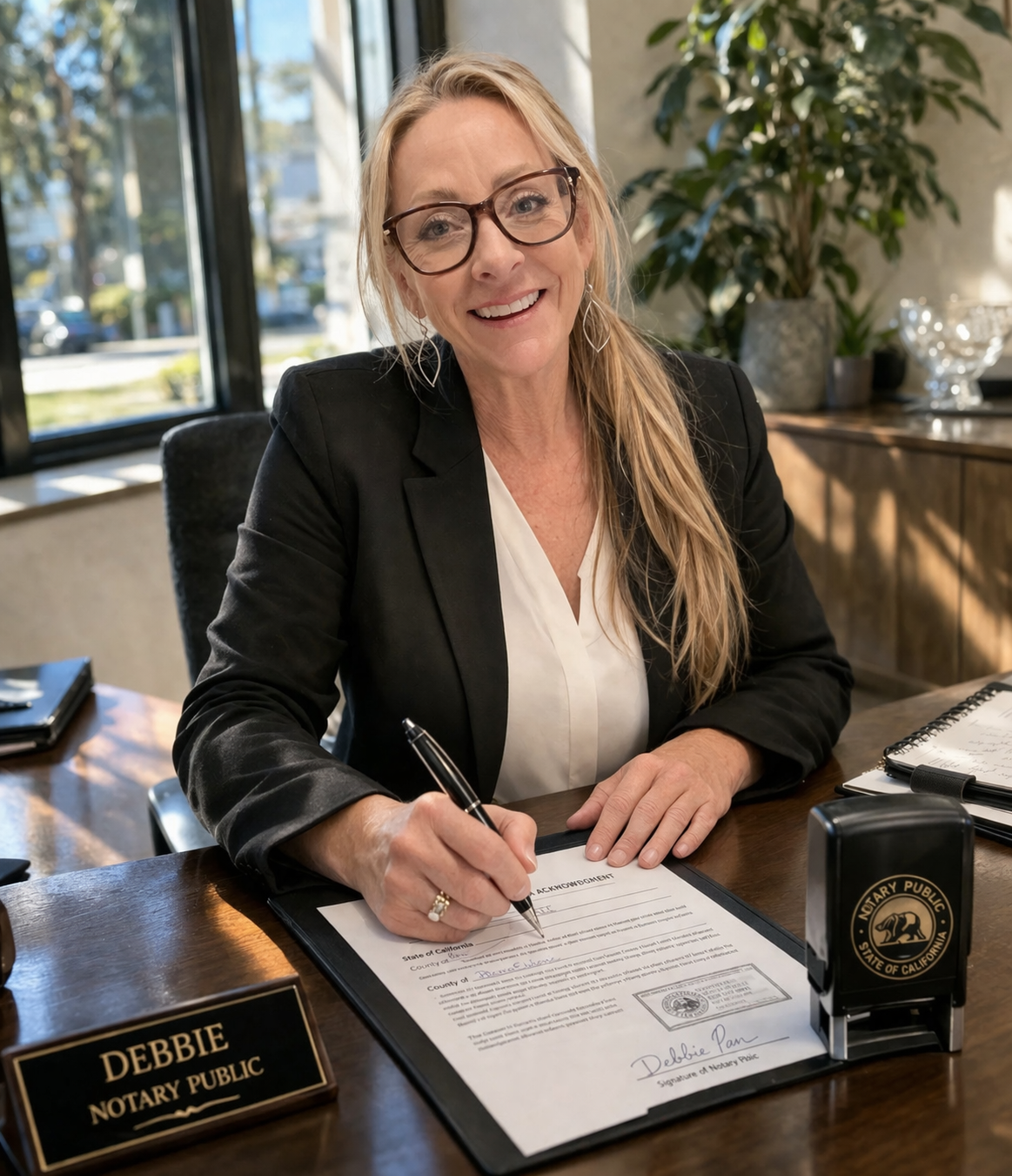
About the Author
Deborah Cuha
Licensed Utah Notary Public (Commission #742886) with 30+ years of experience. NNA Certified Loan Signing Agent and Certified Remote Signing Agent. Based in Park City, serving Summit, Wasatch, and Salt Lake counties.
Read Full Bio →