Yes, a notary can notarize a will in Utah by administering oaths and notarizing the self-proving affidavit. However, the notary's role has important limits. This guide explains exactly what a notary does and does not do during a will signing.
Yes, a notary public can absolutely notarize a will in Utah. In fact, the notary plays a critical role in the will execution process by notarizing the self-proving affidavit that accompanies the will. However, the notary's role has clear legal boundaries. A notary can administer oaths, verify identities, and witness signatures, but a notary cannot draft the will, provide legal advice about its contents, or act as an attorney. This guide explains exactly what a notary does during a will signing, what the limits are, and why proper notarization matters for your estate plan.
Key Takeaways
- A Utah notary can notarize a will by processing the self-proving affidavit
- The notary verifies identities, administers oaths, and witnesses signatures
- A notary cannot draft a will, give legal advice, or decide if the will is legally sufficient
- The self-proving affidavit allows the will to be admitted to probate without witness testimony
- The notarization fee is $10 per act at NotaryLTD
- SB 139 requires mandatory journal-keeping for all notarial acts starting May 6, 2026
Need a will notarized in Park City?
NotaryLTD provides professional will notarization at $10 per act. We handle the self-proving affidavit process with 30+ years of experience. Available 7 days a week.
Book NowWhat the Notary Does During a Will Signing
The notary's role during a will signing is specific and well-defined under Utah law. Understanding this role helps you prepare for the appointment and ensures the process goes smoothly.

The primary function of the notary during a will signing is to notarize the self-proving affidavit. This is a separate document, usually attached to the will, in which the testator (the person making the will) and the witnesses swear under oath that the will was properly executed. The notary administers this oath, which is a formal legal act that carries the same weight as testimony given in court.
The notary verifies the identity of every person who signs the affidavit. The testator and both witnesses must present valid government-issued photo ID, such as a state driver's license, state ID card, or U.S. passport. Utah Driving Privilege Cards are not accepted. The notary examines each ID to confirm that the person presenting it matches the photo and name on the identification.
The notary observes the actual signing. The testator signs the will in the presence of the notary and the witnesses. The witnesses then sign the will, attesting that they observed the testator sign. All parties then sign the self-proving affidavit. The notary watches each signature occur and confirms that the signers are not being coerced or pressured.
The notary applies their official seal and completes the notarial certificate on the self-proving affidavit. This certificate states that the signers appeared before the notary, were properly identified, and swore to the truth of the affidavit's contents. The seal serves as an official mark of the State of Utah, indicating that a commissioned notary performed the act.
The notary records the transaction in their journal. This journal entry includes the date, time, type of notarial act, the names and IDs of all signers, the type of document, and the fee charged. Under SB 139, effective May 6, 2026, journal-keeping is mandatory for all notarial acts in Utah. At NotaryLTD, Commission #742886, we have maintained detailed journals for over 30 years, well before the legislative mandate.
What a Notary Cannot Do for a Will
The boundaries of the notary's role are equally important to understand. A notary is not an attorney and cannot perform functions that constitute the practice of law. Crossing these boundaries could expose the notary to legal liability and could compromise the validity of the will.
A notary cannot draft or prepare a will. Writing a will involves making legal decisions about the distribution of assets, the appointment of executors and guardians, and the inclusion of specific legal language required by Utah statute. These decisions require legal training and constitute the practice of law. If you need a will prepared, consult with an estate planning attorney. The notary's job begins after the will is drafted and ready for signatures.
A notary cannot provide legal advice about the will's contents. If you ask the notary whether your will is legally sufficient, whether you need a trust instead, or whether a specific provision is enforceable, the notary must decline to answer. Providing answers to these questions would constitute unauthorized practice of law. NotaryLTD is always transparent about this boundary and will refer you to a qualified attorney if you need legal guidance.
A notary cannot determine whether the testator has the legal capacity to make a will. Utah law requires the testator to be of sound mind, but evaluating mental capacity is a medical and legal determination, not a notarial one. The notary can observe the testator's demeanor and refuse the notarization if the testator appears confused or unable to communicate, but the notary's observation is not a legal determination of capacity.
A notary cannot decide whether the witnesses are qualified. Utah law specifies who can and cannot serve as a witness to a will. The parties should ensure that the witnesses meet the legal requirements before the notarization appointment. The notary will verify identities and administer oaths but will not make legal determinations about witness qualifications.
A notary cannot certify that a will is valid. The notarization certifies that the signers appeared, were identified, and swore to the affidavit. It does not certify that the will meets all legal requirements for validity under Utah law. The validity of the will is ultimately determined by the probate court. For details about what makes a will valid in Utah, see our comprehensive guide on whether wills need to be notarized in Utah.
The Self-Proving Affidavit: Why It Matters
The self-proving affidavit is the specific document that the notary notarizes during a will signing, and it serves a crucial purpose in the probate process. Understanding its function helps you appreciate why notarization is so valuable for wills.
Under Utah Code 75-2-504, a self-proving affidavit allows the will to be admitted to probate without the witnesses having to appear in court and testify. Without the affidavit, the probate court may require one or both witnesses to come to court and confirm that they actually witnessed the testator sign the will. Locating witnesses years or decades after the signing can be difficult or impossible.
The affidavit contains specific sworn statements from the testator and the witnesses. The testator swears that the will is their free and voluntary act. The witnesses swear that they observed the testator sign, that the testator appeared to be of sound mind, and that the testator was not acting under duress or undue influence. These sworn statements, made under oath before a notary, carry the same legal weight as courtroom testimony.
Utah Code 75-2-504 provides a statutory form for the self-proving affidavit. Using this exact form ensures that the probate court will accept the affidavit without question. Many estate planning attorneys include the statutory self-proving affidavit as a standard part of every will they draft. If your will does not include one, ask your attorney to prepare it.
The combination of the affidavit's sworn statements and the notary's verification creates a powerful evidentiary record. If anyone challenges the will during probate, the self-proving affidavit stands as independent, notarized evidence that the execution was proper. This is far stronger than relying on witness memories, which can fade, change, or be influenced over time.
How to Prepare for Your Will Notarization
Proper preparation ensures that your will notarization appointment goes smoothly and that all legal requirements are met. Here is a checklist for the appointment.
Have the will and self-proving affidavit prepared by your attorney. The documents should be complete and ready for signatures. All blanks should be filled in, including beneficiary names, executor appointments, and any specific bequests. Do not sign either document before the appointment.
Coordinate with your two witnesses. Both witnesses must attend the appointment and bring valid government-issued photo ID. The witnesses should not be beneficiaries of the will, although Utah law does not automatically invalidate a will witnessed by an interested party, it can create complications. Choose disinterested witnesses whenever possible.
Bring your own valid government-issued photo ID. The notary will verify the identity of the testator and both witnesses. Acceptable IDs include a state driver's license, state ID card, or U.S. passport. Utah Driving Privilege Cards are not accepted for notarization purposes.
Plan for adequate time. A will notarization typically takes 15 to 30 minutes, depending on the complexity of the documents and the number of signatures required. Allow extra time if you have questions or if any of the parties need additional explanation of the process.
If you need a mobile notary, call NotaryLTD at 435-565-1333 to schedule. We travel throughout Park City, Salt Lake City, Summit County, and Wasatch County. Mobile visits are particularly convenient when the testator has mobility issues or when coordinating schedules among the testator, witnesses, and attorney. Travel fee is $0.70 per mile from our Park City office.
Schedule your will notarization appointment.
In-office, mobile, or RON. $10 per act. NotaryLTD serves the greater Park City area 7 days a week, 9 AM to 9 PM.
Book NowNotary vs. Attorney: Understanding the Roles
The notary and the attorney play distinct, complementary roles in the will creation and execution process. Neither can substitute for the other, and understanding the difference protects you from legal pitfalls.
The attorney drafts the will, advises you on legal strategies for asset distribution, ensures the will complies with Utah law, and may appear at the signing to oversee the execution. The attorney is your legal advisor and advocate throughout the estate planning process.
The notary executes the self-proving affidavit by verifying identities, administering oaths, witnessing signatures, and applying the official seal. The notary does not need to understand the legal implications of the will's provisions. Their function is to ensure the execution ceremony meets the procedural requirements for a valid self-proving affidavit.
Some attorneys are also notaries and can perform both functions. However, many attorneys prefer to use an independent notary for the self-proving affidavit. Having an independent notary creates an additional layer of impartial verification that can strengthen the will's defense against future challenges.
If you do not have an attorney, you can still get your will notarized at NotaryLTD. We notarize wills that have been prepared by the testator themselves (often using online templates), wills prepared by attorneys, and holographic wills. We cannot review the will for legal sufficiency, but we will ensure the notarization itself is performed correctly and meets all Utah requirements.
Can You Notarize a Will Through RON?
Yes, Utah law permits will-related documents, including self-proving affidavits, to be notarized through Remote Online Notarization (RON). All parties, including the testator and both witnesses, must participate in the same RON session and pass identity verification through the platform.
RON for will notarization has specific practical considerations. The testator and witnesses must all be on video simultaneously so the notary can confirm that everyone is present for the signing. Each party signs the document electronically, and the notary applies a digital seal. The entire session is recorded, creating a permanent audiovisual record of the execution.
The recording is particularly valuable for will notarizations because it captures the testator's demeanor, apparent mental state, and voluntary participation. If the will is later challenged on grounds of incapacity or undue influence, the recording provides direct evidence of the testator's condition at the time of signing.
Some estate planning attorneys recommend in-person notarization over RON for wills, arguing that physical presence provides a more robust defense against challenges. Others view the RON recording as an advantage that in-person notarization does not provide. The choice depends on your specific circumstances and your attorney's recommendation.
NotaryLTD offers both in-person and RON will notarization. In-person notarization is $10 per act. RON is $25 per session. For questions about which option is right for your situation, call us at 435-565-1333 or visit our FAQ page.
After Notarization: Protecting Your Will
Once the will and self-proving affidavit are notarized, proper storage and communication are essential to ensure your wishes are carried out when the time comes.
Store the original will in a secure location. Options include a fireproof safe at home, your attorney's office, or a bank safe deposit box. Be aware that some banks restrict access to safe deposit boxes upon the account holder's death, so if you choose this option, make sure your executor can gain access. Do not store the original will in a location where only you have access.
Tell your executor where the will is stored. Your executor needs to know the will exists and where to find it. Provide them with the specific location, any access codes or keys needed, and the name and contact information of your attorney if one was involved in the preparation.
Consider providing copies to key family members. While only the original will is admitted to probate, providing copies to family members lets them know your wishes and reduces the risk of the will being lost or hidden. Mark copies clearly as copies to prevent confusion.
Keep a list of your will-related documents together. This list should include the will itself, the notarized self-proving affidavit, any codicils (amendments), and your other estate planning documents such as trusts, powers of attorney, and healthcare directives. Having everything organized makes estate administration much easier for your family.
Review your will periodically and after major life events. Marriage, divorce, the birth of children or grandchildren, significant changes in assets, or a move to a new state may all warrant updates to your will. Each updated version requires new notarization of the self-proving affidavit.
Professional will notarization with 30+ years of experience.
NotaryLTD, Commission #742886. In-person, mobile, or RON. Call 435-565-1333 or book online today.
Book NowFrequently Asked Questions
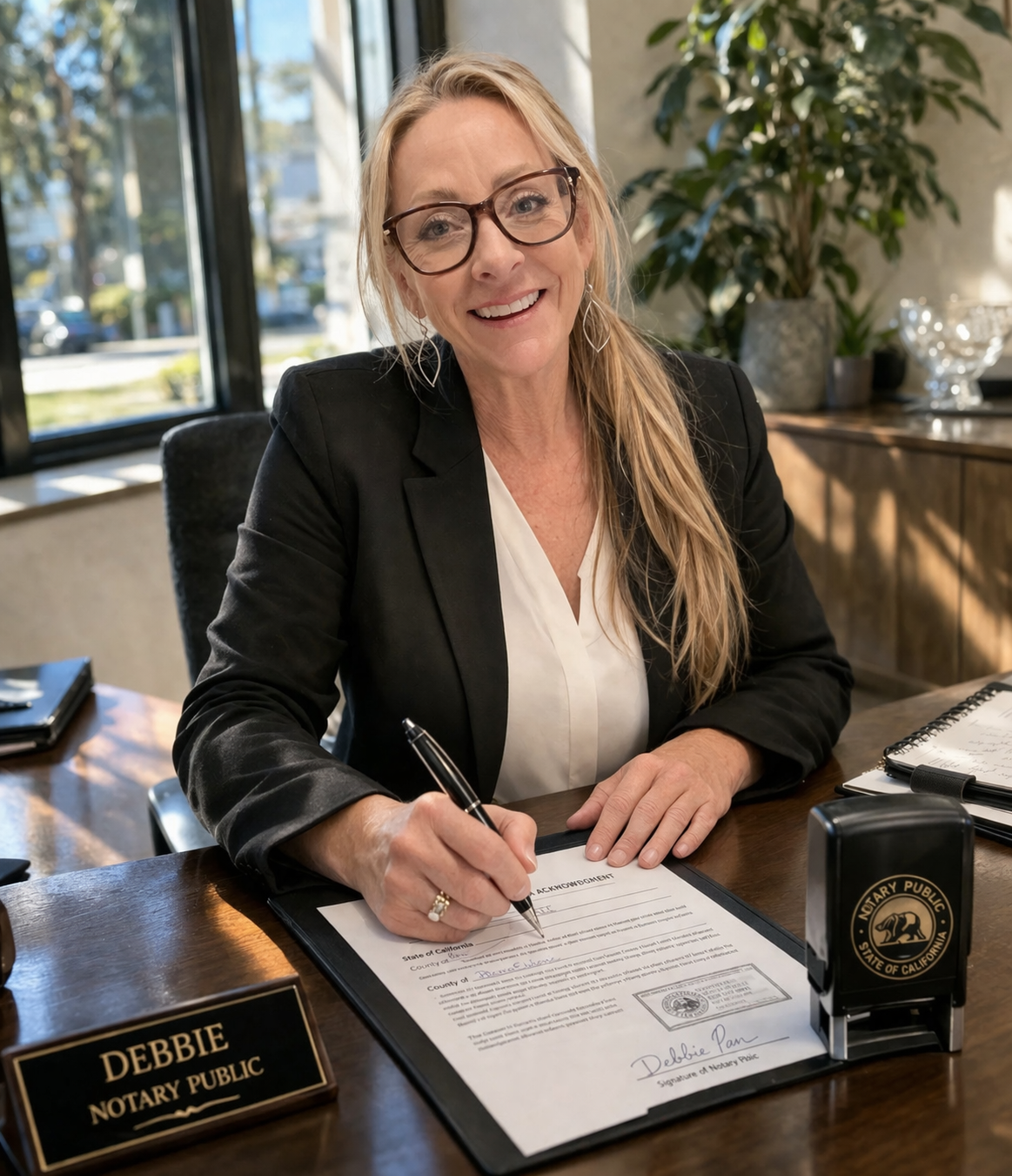
About the Author
Deborah Cuha
Licensed Utah Notary Public (Commission #742886) with 30+ years of experience. NNA Certified Loan Signing Agent and Certified Remote Signing Agent. Based in Park City, serving Summit, Wasatch, and Salt Lake counties.
Read Full Bio →