A loan signing agent cannot explain the financial or legal terms of your mortgage documents. They can identify documents, show where to sign, and point you to sections containing key information.
No, a loan signing agent cannot explain your mortgage terms. They guide the signing process but are legally prohibited from providing legal or financial advice.
Key Takeaways
- Loan signing agents cannot explain interest rates, fees, or loan terms
- They can identify document types and show where signatures are needed
- Contact your lender or real estate attorney with questions about loan terms
- Review your Closing Disclosure at least three days before signing to prepare questions
- The signing agent's role is to ensure proper document execution, not provide advice
Need a professional signing agent?
NotaryLTD provides experienced loan signing services focused on accurate document execution. Available 7 days a week.
Book NowWhat Signing Agents Cannot Do
Signing agents cannot explain loan terms, provide legal advice, recommend actions, or answer questions about your interest rate, fees, or payment schedule.

A loan signing agent operates as a neutral third party in the closing process. Their role is strictly limited to facilitating the proper execution of documents. They are not licensed attorneys, financial advisors, or loan officers, and providing guidance that falls into any of those professional categories would be practicing without a license.
Specifically, a signing agent cannot explain what your interest rate means or whether it is competitive. They cannot tell you whether your closing costs are reasonable. They cannot advise you on whether you should sign the documents or walk away. They cannot interpret any clause, rider, or provision in your loan package. They cannot recommend that you seek legal counsel, although they can suggest you contact your lender if you have questions about specific terms.
This restriction exists to protect you. If a signing agent provided incorrect financial or legal advice, you might rely on it to your detriment. By maintaining a clear boundary between document facilitation and professional advice, the system ensures that only qualified professionals answer your substantive questions.
Some borrowers feel frustrated when a signing agent cannot answer their questions at the closing table. This frustration is understandable, but it highlights the importance of preparing before the signing appointment. Your lender, real estate agent, and attorney are the appropriate contacts for questions about your loan terms.
What Signing Agents Can Do
Signing agents can identify each document in your package, show you where to sign and initial, and point you to sections containing key information.
While they cannot explain what your documents mean, signing agents provide substantial value during the closing process. They know every document type in a standard loan package and can tell you the general category each belongs to. For example, they can say "This is your closing disclosure, which shows your loan terms and closing costs on the first page" without explaining what those terms mean.
Signing agents ensure that every signature, initial, and date is placed in the correct location. Missing a single initial or dating a page incorrectly can delay your closing, so the agent's careful page-by-page guidance prevents costly errors. They also verify that all pages are present in the package and that nothing is missing.
A good signing agent will also point you to the sections of documents where you can find specific information. For instance, they can show you where on the closing disclosure your monthly payment is listed, where your interest rate appears on the promissory note, and where your closing costs are itemized. You can then compare these numbers to what your lender disclosed to you previously.
The agent also handles the notarization of documents that require it, verifying your identity and applying their official seal and signature. This is the core notarial function that gives the documents legal standing for recording purposes.
Who Can Explain Your Mortgage Documents
Your loan officer, real estate attorney, or title company representative are the appropriate contacts for questions about your mortgage terms and documents.
Your loan officer is the primary resource for questions about your specific loan terms. They originated your loan, know your financial situation, and can explain why certain terms, rates, or fees apply to your transaction. Before the signing, request a call with your loan officer to walk through the Closing Disclosure and address any concerns.
A real estate attorney can provide independent legal advice about the documents you are signing. If you have concerns about specific clauses, liability provisions, or legal obligations in the deed of trust, an attorney can review them and advise you accordingly. In complex transactions, such as those involving commercial property, multiple parcels, or unusual terms, legal review before signing is strongly recommended.
Your real estate agent can answer questions about the transaction itself, including how earnest money is applied, what happens on the possession date, and how any negotiated repairs or credits are reflected in the closing documents. While agents cannot provide legal advice, they understand the practical aspects of the transaction and can help you connect with the right professionals.
The title company or closing attorney coordinating the transaction can also address questions about title insurance, recording fees, and the logistics of the closing process. They prepared the document package and can explain why certain forms are included.
How to Prepare Questions Before Signing
Review your Closing Disclosure at least three business days before closing and send any questions to your lender immediately so they are resolved before the signing.
Federal law requires your lender to provide the Closing Disclosure at least three business days before your closing. Use this time wisely. Read through every page of the disclosure and compare the numbers to your original Loan Estimate. Make a list of anything that looks different, confusing, or concerning.
Common questions borrowers should resolve before the signing include: Why did my closing costs change from the original estimate? What is the difference between my interest rate and my APR? Why is there an escrow account and what does it cover? What are these specific line items under lender fees? Is there a prepayment penalty on my loan?
Contact your loan officer with your list of questions and insist on clear answers before the signing appointment. If your loan officer is not responsive, escalate to their manager or contact the title company for assistance. Do not go to the signing table with unresolved questions, because the signing agent will not be able to help you answer them.
If you feel you need independent legal review, schedule an appointment with a real estate attorney before the signing. Many attorneys offer flat-fee document reviews for residential real estate transactions. This investment is particularly worthwhile for first-time homebuyers or borrowers who feel uncertain about any aspect of their loan.
Questions about the signing process?
We can explain how the signing works and what to expect. For loan term questions, contact your lender before the appointment.
Contact UsWhat If You Have Questions During the Signing?
If questions arise during the signing, you can pause the appointment and call your lender or attorney before continuing.
You are not required to sign all documents in one uninterrupted session. If something on a document concerns you, ask the signing agent to pause while you contact your lender. A professional signing agent will accommodate reasonable pauses and will not pressure you to continue signing if you have unresolved concerns.
However, be aware that pausing a signing to make phone calls can significantly extend the appointment and may create logistical challenges if recording deadlines are tight. This is another reason why resolving all questions before the signing is the better approach.
If you discover a significant error during the signing, such as a wrong loan amount or incorrect property address, the signing agent will contact the title company to determine how to proceed. In some cases, corrected documents can be prepared quickly. In other cases, the signing may need to be rescheduled.
You always have the right to refuse to sign. If you are not comfortable with the terms of your loan or the documents presented, you can walk away from the closing. There may be financial consequences (loss of earnest money, for example), but you should never feel pressured to sign documents you do not understand or agree with.
The Value of a Professional Signing Agent
A professional signing agent ensures your closing documents are executed correctly, preventing costly errors and delays even though they do not provide legal advice.
The signing agent's expertise lies not in explaining financial terms but in knowing exactly how every document must be executed. They know which pages require signatures, which require initials, and which require dates. They know the specific requirements of different lenders and title companies. They know when a document has been pre-printed with an error and needs to be corrected before you sign.
This expertise prevents the types of errors that delay closings and cost money. A misplaced signature, a missing initial, an incorrect date, or an improperly notarized page can all result in rejected documents, delayed recordings, and postponed closings. In competitive markets like Park City, a delayed closing can mean losing the property.
At NotaryLTD, our NNA-certified signing agent has over 30 years of experience and has handled thousands of closings across every loan type. We work with all major title companies and signing services and understand the specific requirements that each one demands. Visit our loan signing page to learn more or check our FAQ for additional information about the closing process.
Call us at 435-565-1333 or visit our contact page to schedule your signing appointment.
Ready for a smooth closing?
NotaryLTD ensures every document is executed correctly. NNA-certified, 30+ years experience, available 7 days a week.
Book Your SigningFrequently Asked Questions
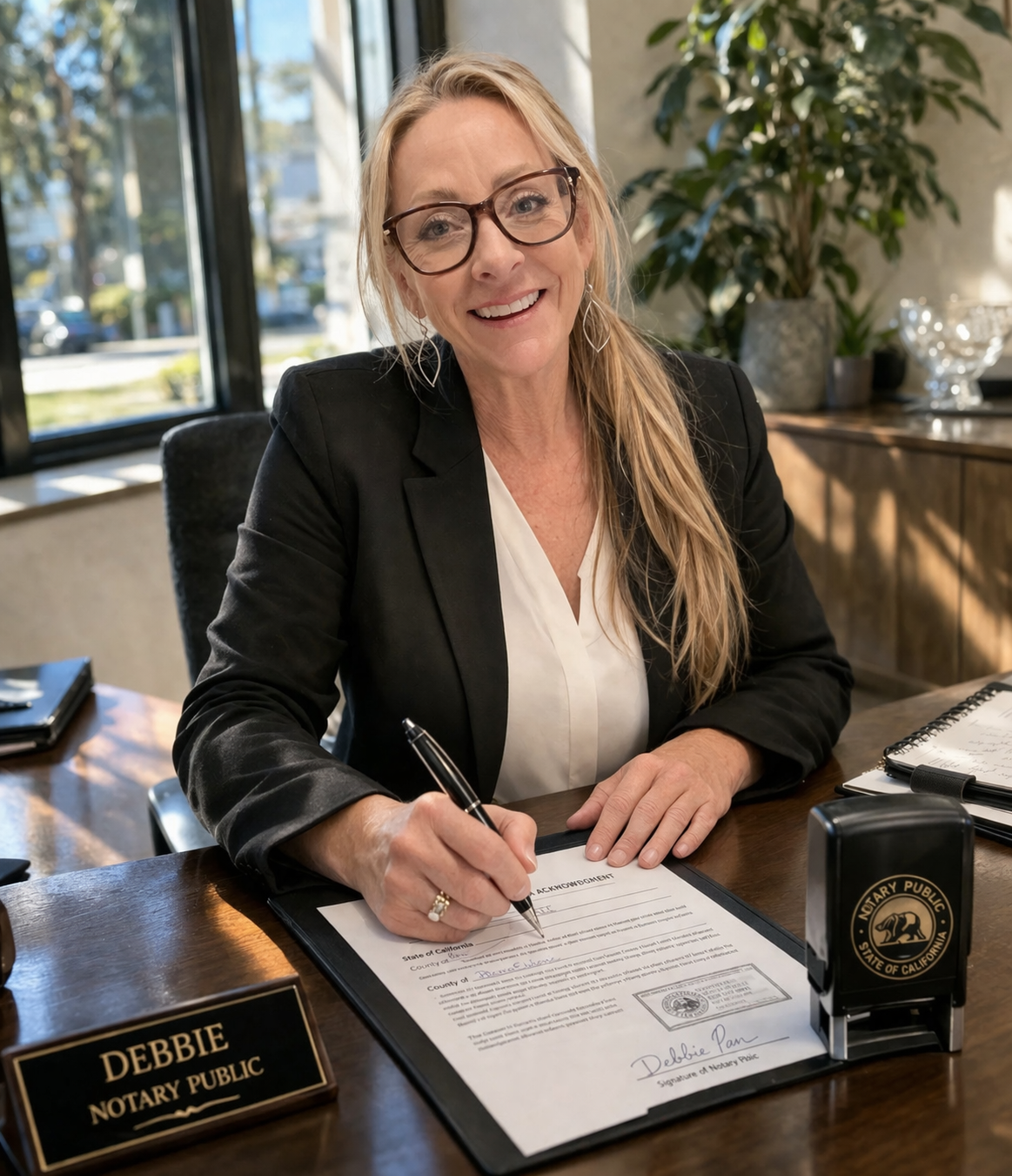
About the Author
Deborah Cuha
Licensed Utah Notary Public (Commission #742886) with 30+ years of experience. NNA Certified Loan Signing Agent and Certified Remote Signing Agent. Based in Park City, serving Summit, Wasatch, and Salt Lake counties.
Read Full Bio →