Blind and visually impaired individuals have every legal right to get documents notarized in Utah. This guide explains the accommodations, procedures, and protections that ensure an accessible notarization experience.
Absolutely yes. Blind and visually impaired individuals have the full legal right to get documents notarized in Utah and every other U.S. state. No notary may refuse service solely because a signer cannot see. This guide explains the specific procedures, accommodations, and legal protections that apply to notarization for individuals who are blind or visually impaired in Utah.
Key Takeaways
- Blind and visually impaired people can legally get documents notarized in Utah
- The Americans with Disabilities Act (ADA) protects signers from discrimination
- A notary may read the document aloud or allow a trusted person to read it
- The signer must still demonstrate willingness and awareness of what they are signing
- Utah law does not require the signer to physically read the document themselves
- Remote Online Notarization (RON) offers additional accessibility benefits
Need accessible notary services in Park City?
NotaryLTD provides accommodating notary services for blind and visually impaired signers. We come to you or connect via RON. Call 435-565-1333 to discuss your needs.
Book NowThe Legal Right to Notarization for Blind Individuals
Under both federal and Utah state law, a person's visual impairment does not disqualify them from having documents notarized. The Americans with Disabilities Act (ADA) prohibits discrimination against individuals with disabilities in public accommodations and services, and notarial services fall within this scope. A notary who refuses to perform a notarization solely because a signer is blind would be violating federal law.

Utah's notary statutes focus on three core requirements for a valid notarial act: the signer must appear before the notary (in person or via Remote Online Notarization), the signer must be properly identified, and the signer must demonstrate that they are signing willingly and with awareness of the document's contents. None of these requirements demand that the signer read the document with their own eyes. A blind individual can satisfy all three conditions through reasonable accommodations.
The Utah Division of Corporations and Commercial Code, which oversees notary commissions, does not include any provision barring notarization for visually impaired individuals. In fact, the state's framework implicitly supports accommodations by not mandating that the signer personally read the document. The emphasis is on the signer's understanding and voluntary participation, not their method of receiving information about the document.
It is important to note that a notary is not certifying that the signer read the document. The notary is certifying that the signer appeared, was identified, and acknowledged the signature or swore to the truthfulness of the contents. Whether the signer absorbed the content through reading, listening, or Braille is irrelevant to the validity of the notarial act.
How Notarization Works for Blind Signers
The notarization process for a blind or visually impaired signer follows the same general steps as any other notarization, with specific accommodations to ensure the signer understands what they are signing. Here is how the process typically works.
First, the signer appears before the notary either in person or through a RON session. The notary verifies the signer's identity using a government-issued photo ID, just as they would for any other signer. The ID requirements are identical regardless of the signer's visual ability. A valid driver's license, state ID, or U.S. passport is acceptable. Note that Utah Driving Privilege Cards are not accepted for notarization purposes.
Second, the document must be communicated to the signer. The notary has several options. They may read the entire document aloud to the signer. Alternatively, the signer may bring a trusted person who can read the document to them. The signer may also use assistive technology such as a screen reader or Braille display to review the document independently. The critical point is that the signer must have the opportunity to understand the document before signing.
Third, the signer signs the document. If the signer cannot see where to sign, the notary or an assistant may guide their hand to the signature line. The notary should never physically move the signer's hand or force a signature. The signer may also use a signature stamp or mark if they cannot write. Utah law recognizes marks as valid signatures when properly witnessed.
Fourth, the notary completes the notarial certificate, affixes their seal, and records the transaction in their journal. Starting May 6, 2026, under SB 139, journal entries are mandatory for all notarial acts in Utah. The journal entry should note any accommodations provided during the session, such as reading the document aloud.
Accommodations a Notary Must Provide
A professional notary should be prepared to make reasonable accommodations for blind and visually impaired signers. These accommodations ensure the process is fair, legal, and comfortable for everyone involved.
Reading the document aloud is the most common accommodation. The notary reads every word of the document so the signer can hear and understand the contents before signing. This is a standard practice and does not compromise the notarization in any way. The notary should read clearly, at a reasonable pace, and be willing to repeat sections if the signer asks.
Allowing a companion to read the document is another common accommodation. The signer may bring a family member, friend, attorney, or caregiver who reads the document to them. The notary should note in their journal that a companion read the document to the signer. The companion is not a party to the transaction and is simply facilitating communication.
Providing documents in accessible formats may be appropriate in some situations. If the signer uses Braille, large print, or digital formats compatible with screen readers, the document preparer (not the notary) may be able to provide an accessible version. The notary's role is to notarize the document as presented, so any format changes should be coordinated beforehand.
Guiding the signer to the signature line is a practical accommodation. The notary can point out where to sign by placing the signer's finger on the correct line or using a signature guide. Physical guidance should be gentle and consensual. At NotaryLTD's mobile notary service, we bring all necessary tools and take the time to ensure every signer is comfortable with the process.
Using assistive technology during the session is increasingly common. Screen readers, magnification software, and Braille displays can help visually impaired signers independently review documents. For RON sessions, many platforms support screen reader compatibility, making remote notarization an excellent option for blind signers who prefer to review documents digitally from the comfort of their home.
Journal Documentation for Accessible Notarizations
Proper journal documentation protects both the notary and the signer. When notarizing for a blind or visually impaired individual, the notary should record additional details about the accommodations provided during the session.
The journal entry should include all standard information: date, time, type of notarial act, document type, signer's name, ID presented, and the notary's fee of $10 per notarial act. Beyond these basics, the notary should note that the signer was visually impaired and describe the accommodation used, whether the notary read the document aloud, a companion read it, or the signer used assistive technology.
Under SB 139, which takes effect May 6, 2026, Utah notaries are required to maintain journals for all notarial acts. This legislation reinforces the importance of thorough record-keeping. A well-documented journal entry provides evidence that the notary followed proper procedures and that the signer had full access to the document's contents before signing.
If the signer used a mark instead of a traditional signature, the journal should note this and identify any witnesses who were present. Utah law permits a mark as a valid signature when it is witnessed, and the notary's journal entry serves as a permanent record of the circumstances.
Questions about accessible notarization?
We handle notarizations for blind and visually impaired signers with care and professionalism. Available 7 days a week, 9 AM to 9 PM.
Book NowRON Accessibility Benefits for Visually Impaired Signers
Remote Online Notarization offers several advantages for blind and visually impaired signers that in-person notarization may not provide. The digital nature of RON sessions makes them inherently more compatible with assistive technology.
During a RON session, the document is presented on screen in a digital format. Signers who use screen readers can have the software read the document aloud in their preferred voice and speed. They can navigate section by section, pause, rewind, and re-read any portion without feeling rushed. This level of control is often more comfortable than having another person read the document aloud.
RON platforms also support zoom and magnification features for signers with low vision who can see some text when it is enlarged. The signer can increase the font size on their screen without affecting the official document, making it easier to review the contents independently.
The NotaryLTD RON service charges $25 per session and provides a fully guided experience. Our notaries are trained to work with signers who use assistive technology, and we allow extra time for sessions that require accommodations. There is no additional charge for accessibility accommodations. The entire session is recorded as required by Utah law, which provides an additional layer of protection for all parties.
For signers who cannot travel easily, RON eliminates the need for transportation to a notary's office. The signer can complete the entire process from home using their own computer and assistive devices in a familiar environment. This is particularly beneficial for individuals who rely on specific hardware or software configurations that may not be available at a notary's office.
When a Notary Can Legally Refuse
While a notary cannot refuse service solely because a signer is blind, there are legitimate reasons any notary may decline to perform a notarization. These reasons apply to all signers, not just those with visual impairments.
A notary may refuse if the signer cannot be properly identified. If the signer does not have a valid government-issued photo ID, the notary cannot verify their identity and must decline. This rule applies equally to sighted and blind signers. Acceptable IDs include a state driver's license, state ID card, or U.S. passport. Utah Driving Privilege Cards are not accepted.
A notary may refuse if they believe the signer does not understand the document or is being coerced. If the notary has reason to believe that the signer is not acting voluntarily, regardless of the accommodation provided, the notary has a duty to stop the notarization. This is a protection for the signer, not a form of discrimination.
A notary may refuse if the signer is unwilling to accept any offered accommodation. For example, if a blind signer refuses to have the document read aloud, refuses to bring a companion, and refuses to use assistive technology, the notary may reasonably conclude that the signer has not reviewed the document and decline to proceed. The notary's obligation is to ensure the signer has the opportunity to understand the document, and if the signer refuses all means of access, the notary is within their rights to stop.
If you encounter a notary who refuses service inappropriately, you can file a complaint with the Utah Division of Corporations and Commercial Code. The complaint process is straightforward, and the division investigates allegations of notary misconduct. For more information about notary regulations and your rights, visit our FAQ page.
Tips for a Smooth Notarization Experience
Preparation helps ensure that the notarization goes smoothly for blind and visually impaired signers. Here are practical steps to take before your appointment.
Contact the notary in advance. Let them know about your visual impairment and discuss the accommodations you prefer. A good notary will welcome this conversation and prepare accordingly. When you call NotaryLTD at 435-565-1333, we discuss your specific needs and plan the session to ensure your comfort.
Bring a valid government-issued photo ID. Ensure your ID is current and not expired. If you use a state ID rather than a driver's license, that works perfectly. Have the ID ready and accessible when the session begins.
Consider bringing a trusted companion. If you prefer to have someone you know read the document to you rather than the notary, bring that person to the appointment. Let the notary know in advance so they can note the companion's presence in their journal.
Request the document in advance if possible. Ask the document preparer for a digital copy before the notarization appointment. This allows you to review it using your preferred assistive technology at home, so you arrive at the appointment already familiar with the contents. You will still need to sign the original document at the appointment.
Allow extra time. Accommodated sessions may take longer than standard notarizations, and there is nothing wrong with that. Budget extra time so you do not feel rushed. At NotaryLTD, we never rush a session and our pricing does not increase for longer sessions.
Utah Law and ADA Protections
The intersection of Utah notary law and the Americans with Disabilities Act creates a strong framework of protections for blind signers. Utah Code Title 46, which governs notarial acts, does not require the signer to read the document, only to acknowledge the signature or swear to the document's contents. This means the law already accommodates individuals who cannot read visually.
The ADA further reinforces these protections by requiring public accommodations and service providers to make reasonable modifications for individuals with disabilities. A notary operating as a business or in a public capacity falls under the ADA's requirements. Refusing to provide a reasonable accommodation, such as reading a document aloud, would constitute disability discrimination under federal law.
Utah's Human Rights Act (Utah Code 13-28) provides additional state-level protections against discrimination based on disability. This act covers places of public accommodation, which includes businesses offering notary services. Between the ADA and Utah's own anti-discrimination laws, blind and visually impaired individuals have robust legal protections when seeking notary services.
If you need accessible notarization in the Park City, Salt Lake City, or Summit County area, NotaryLTD is committed to providing a professional and accommodating experience. We serve clients throughout Salt Lake, Summit, and Wasatch counties with mobile notary services at $0.70 per mile for travel, and our office in Park City is accessible for in-person appointments.
Ready to schedule your notarization?
NotaryLTD provides fully accommodating services for all signers. Call 435-565-1333 or book online. Commission #742886.
Book NowFrequently Asked Questions
About the Author
Deborah Cuha
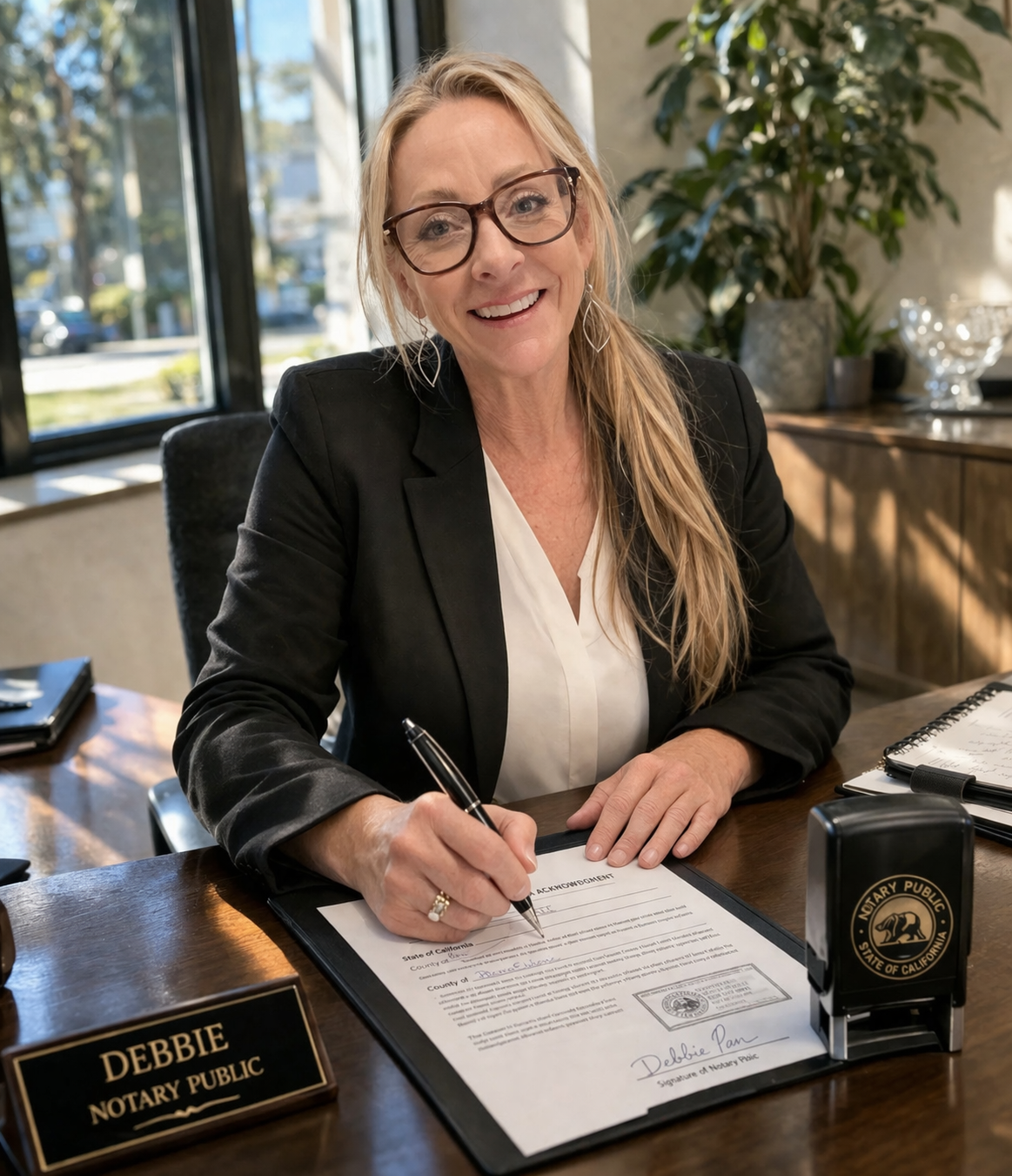
Licensed Utah Notary Public (Commission #742886) with 30+ years of experience. NNA Certified Loan Signing Agent and Certified Remote Signing Agent. Based in Park City, serving Summit, Wasatch, and Salt Lake counties.
Read Full Bio →